Tampilkan postingan dengan label Natural World. Tampilkan semua postingan

Selasa, 10 Januari 2012

10 of the Must-Try Adventure Places in the Philippines

Sometimes, the ones who are bound to you are the one who makes a great influence to you. Sharing a story to a friend about the places you’ve been is good, but bringing them to that place and letting them feel and experience the same feeling of what you have felt when somebody have shared it to you is better.
We only have three seasons of life:

a. Full of energy, lots of time, but no money
b. Full of energy, lots of money, but no time
c. We have lots of money, lots of time, but no more energy


What season are you now? When will you be able to do outdoors and have some adventures? May these pieces of pictures encourage those people out there to see ten of the many magnificent art works of God, from mountains to beaches, from ocean and seas to waterfalls, from boulders to caves, from northern part of the Philippines to the southern part of the country, Swim, hike, and explore!

1 - Mt.Pulag, Kabayan Benguet


Mt. Pulag also known as the “Playground of Gods”, standing at 9,586 feet above sea level, found in the Cordillera region of Central Luzon, is the highest mountain in Luzon and second highest in the Philippines next to Mt. Apo. The Mt. Pulag National Park is open all year round. Dry season is the best time to trek up to the summit preferably from the month of November to March for you are able to witness breath taking sea of clouds.

Most of its visitors and guests were attracted not only in its low temperature and spectacular sea of clouds, but also on its unique characteristics for its rolling plains, mossy forest and an amazing eye soothing greens which defines its biodiversity. You can camp on the top but only on designated areas. Be sure that you have warm clothing to protect yourself in cold weather as the temperature drops.

The mountain is classified as a major climb with its five defined trails to reach on to the summit which defines it difficulty. These are the Ambangeg trail, also known as the executive trail and the easiest, the Eddet trail, Tawangan trail, Ambaguio trail, and the Akiki trail which is said to be the most difficult among the five.

2 - Lipata Caves


(Lipata Caves of Quezon Province) From Lipata Island is said to have seven 7 Caves which called the Lipata Caves. The said island is found at the Bondoc Peninsula in Quezon which takes you 3-4 hours drive from Manila.

It will take you a 20-30 minutes boat ride from the Padre Burgos Pier, the jump off area, to the island. From the Island a 15-20-minute trek will transpire you to see rock formations at the side of the mountain and amazed with the stalactites and lime stones inside the caves. You can also witness the view of the sea from above along the trail.

The rock formation inside the caves gives amazement into its visitors. The soil of Lipata caves are rich in minerals which are transported by the residents all the way down to the foot of the mountain which is used for growing their crops. However, mining in the caves is prohibited. This activity will surely destroy the caves’ natural rock formations.

3 - Dampalitan Island


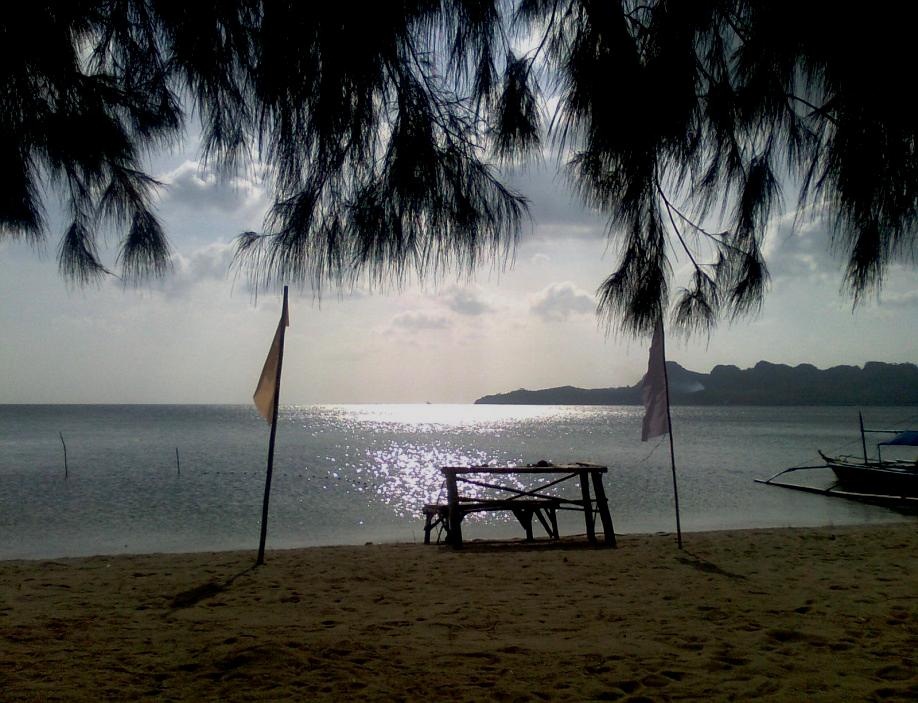
From the province of Quezon lies an island name Dampalitan. Its white sandy beach and long stretch shorelines attracts most of its visitors. The beautiful long stretch of the beach and quiet place returns a peaceful and relaxing experience with nature.

Rocky formation will be seen during the low tide. You can even take your photo almost at the middle of the sea. Take those shots while enjoying the light of the sunset in the place.
A bench near the seashore is best for a seat to watch on the dramatic scene of a sunset along with your best friend or love ones.

4 - Borawan Island


Not far from the Dampalitan Island is the Borawan Island which is name after the combination of Boracay and Palawan for its characteristics of white sand and huge rock formations similar to that of Palawan’s cliffs. You can enjoy the beautiful scenery of the place with its crystal clear water, and long stretch white beach at the west coast of the island.

You can climb on to the top of the huge rocks ranging from 15-20 feet high allows you to view the west and east coast of the island and take shots of your pictures. Be careful on climbing because the edges of the rock are quite sharp.

Camping is allowed in the island, but make sure that you have your head lamps, flash light, extra batteries, and drinking water with you. There is no electricity and fresh water available in the area. If you are avoiding a crowd in the place, you can visit the island before the summer euphoria begins.

5 - Pagbilao Grande Island (Isla Putting Buhangin)


Pagbilao Grande Island in Pagbilao Quezon is also called as “Isla Putting Buhangin” with its fine white sand. It’s cold crystal clear water and white sand stretch attracts its guests. In here also found the “Kwebang Lampas”, a cave located at the east point of the stretch, and one of the highlights when you go in Pagbilao Grande.
The water here is more ideal for swimming compare to the nearby islands of Borawan and Dampalitan. The Pagbilao GrandeIsland is not that crowded with people compared with other beach resorts near it. You can go to the cave known as the “Kwebang Lampas” by passing through the rocky area at the side of foot of the cliff at the east point of the island. Be careful of the slippery rocks you may encounter while going inside the cave. Cold and relaxing views from the cave will definitely sooth you to the nature.

6 - Cape EngañO in Palaui Island


It is like a secret paradise to witness a captivating view of the Dos Hermanos Island from the Cape Engano Lighthouse also known as the “Farol de Cabo Engano”. Located at northern point of Palaui Island, Sta.Ana, Cagayan, an 18th Century light house built during the Spanish time which guides the ships on the coastal areas of Sta.Ana. 229 steps of concrete stair and a trail will lead you all the way to the lighthouse.

Palaui Island was declared as a National Marine Reserve in August 28, 1994 encompassing an area of 7,145 hectares (17,660 acres). The waters around the island boast of 21 commercial species of fishes with about 50 hectares (120 acres) of undisturbed corals.

The hike from Punta Verde, the southeast tip of Palaui, to Cape Engaño takes about 3.5 to 4 hours of hike through beautiful verdant scenery. Primitive camping is allowed at the lighthouse vicinity. [source: wikipedia]

7 - 7 Chambers of Callao Cave in Cagayan


The Callao Cave is located on the Province of Cagayan near Tuguegarao City. According to the locals, the cave has seven chambers and formations namely as the Column, Chapel, Skeleton, Elephant’s Head, Praying Angel, Rocket, Lion’s Head, and the Dog’s Head; the 7th chamber is usually closed except during the holy week.

The photo above is the second chamber of the cave which became a Cathedral by the locals of Cagayan. Each chamber allows the natural light to enlighten the dim areas of the cave. Before witnessing the magnificent cave of stalactites and stalagmites, you have to pass the test of your stamina by surpassing a stair with approximately 200 steps. It said that there are still unexplored areas after the seventh chamber of Callao Cave.

[1] Callao Cave has gained another reputation after the discovery of a foot bone on a excavation done near the first chamber's entrance was proven by archaeologist to be about 67,000years old pushing back the long known Tabon man of being the oldest discovered human remains in the country. this did not just brought a new record within the country but has also placed the Philippines in the sixth position worldwide to have found the oldest Homo sapien fossil.

[source:dong ho’s eskapo 3.0, digital photographers philippines]

8 - Merloquette Falls in Zamboanga


From the Latin City of Asia, Zamboanga, found a magnificent piece of hidden treasure in Merloquete Falls, located at Sitio Merloquet, Barangay Sibulao, Zamboanga City. An approximate 2 hours drive from the city all the way to the jump off. From the jump off, it will drive your excitement band test your endurance by a 15 minutes downhill trek before witnessing the enchanted and majestic waterfall.

Measuring with an estimated width of 13 meters wide and a height of 10 meters high, the soothing sound of the water will surely amazed you. The second water fall with an estimated width of 8 meters wide and a height of 5 meters high lie above the first one that will test your endurance to witness its beauty. It is said that there are eleven waterfalls above the first one that is rarely visited and explored.

9 - Mt.Gulugod Baboy and Anilao Boulders


Not from afar from an overnight hike to Mt. Gulugod Baboy in Mabini Anilao, Batangas, was an amazing side trip to witness scattered boulders of rocks near at the beach. It was really surprising to see and walk on through the rock before having a swim in the clear waters of Anilao.

Anilao Batangas is well known as one of the best diving sites not only in the Philippines but all over the world. Unknowingly, there is a secret place for explorers and hikers to hangout out there to discover and see the beauty of these boulders with the strong waves splashing and playing on it.

At the end of the rocky stretch found a small cave where in you can stay. From there, you can choose where to swim by passing through it. You can also see bats inside the cave when you look upward inside, and requires you for a duck walk to pass through the other side and enjoy beautiful scenery of the sea.

10 - Mt. Makiling in Los Banos Laguna


Mt.Makiling situated at Los Banos Laguna is one of the known enchanted mountains in the Philippines because of the mystical Diwata (fairy) Maria Makiling who takes care of the mountain. According to te locals, you can encounter Diwata Maria Makiling in three persons, you can see her as a maiden, a mother, and an old woman along the trail while trekking on the mountain.

Rising with a 1109 meters above sea level, Mt.Makiling is not just simply an enchanted mountain, but classified as a volcano. It is one of the most challenging must try day hike that probably test your patience and thrill you into the adventure.

[1]The Makiling Traverse is a classic example of an extended dayhike - a climb whose trekking time makes it a "major climb" but whose trail circumstances favor a long dayhike. It is a favorite training climb for mountains that are Difficulty 8/9 or higher - such as Mt Guiting-Guiting - and for good reason: a Makiling Traverse gives hikers a preview of extended hiking (8 hours/day) over a period of three or even four days. Moreover, Makiling gives samplers for various. Melkas Ridge, for example, is an introduction to the long rock scrambling of Guiting-Guiting; the proliferation of limatik and jungle density is the same environment of Halcon; and the meanderings of the Wild Boar Trail evoke Napulauan. Finally, the 'thrill' of a traverse is a junior version of what it takes to cross over Dulang-Dulang to Kitanglad, or Kidapawan to Kapatagan.

[source: Pinoy mountaineer]

About Desha, the author

Des Alimbuyuguen is an adventurous girl who have the passion for the love of nature. She is often called the "Backpacker Girl" since she often go for nature camping with her mountaineer friends.

Sabtu, 09 Juli 2011

10 of the Most Common and Romantic Flowers with their Respective Meanings

Have you received flowers lately? Wonder what's the meaning behind these flowers? Most women are unaware of the meaning behind flowers so whether you send flowers yourself or through a florist make sure the card holds the information to the meaning of the flowers being sent.
Any good florist will know the meaning of the flowers, so if buying through a florist tell them the message you want to send and they will advise you on which flowers are appropriate.

Here's Top 10 of the Most Common and Romantic Flowers with their Respective Meanings
10 - Iris

Blue is faith and hope, purple means compliments or wisdom, white is purity and yellow is passion.
9 - Acacia

Unspoken love, send these if you want to let someone know of your secret admiration.
8 - Primrose

I can’t live without you (evening primose means happy in love).
7 - Lilac

Represents youthful or humility, also confidence.
6 - Carnation

Fascination. Pink is maternal love, striped carnations mean refusal and say you cannot be with someone, yellow is rejection or disappointment but red means my heart aches for you or I am fascinated with you.
5 - Orchid

Rare beauty, refinement, beautiful woman, long life, femininity or mature charm.
4 - Lily

White is purity or virginity, yellow means walking on air but also falsehood and orange means I burn for you.
3 - Tulip

Red is a declaration of love, multicolored means you have beautiful eyes and yellow is hopelessly in love.
2 - Daisy

Mostly represents innocence or a loyal love.
1 - Rose

Red roses say "I love you" but if you place red and white roses together it symbolises perfect unity. A thornless rose means "loved you at first sight". Each colour of rose has a different meaning but for love red is the only colour to send.


Sabtu, 02 Juli 2011

10 of the World's Most Beautiful Waterfalls


There are many, many waterfalls in the world. After all, the vast majority of our planet is covered in water. When land interrupts the flow of water across the landscape, it is here that waterfalls can form.

Interestingly enough there is no standard definition of a waterfall in the modern lexicon. By this we mean there is nothing to define what makes up a waterfall, how to measure a waterfall, and even whether or not a waterfall needs to exist the entire year round. To the objective tourist these debated ideas are mere semantics compared to standing in plain view of the water thundering over high cliff faces with enough force to pound the local geography into new shapes and forms. Many waterfalls are thought to be inspiration for many functional and decorative garden fountains.

According to world-of-waterfalls.com and I totally agree ,it's not easy to put together a Top 10 Best Waterfalls List because it's completely subjective and limited to each person's experience with the falls being named.

This is by no means a permanent list and it's sure to change as we continue to collect more falls from around the world. So without further adieu, here they are in reverse order...

Here's Top 10 of the World's Most Beautiful Waterfalls

10 - SUTHERLAND FALLS [Fiordland, New Zealand]


In a country that holds a special place in our hearts, this gorgeous 580m waterfall is easily New Zealand's most spectacular waterfall and makes our list. Given its remote location deep in the wild and beautiful Fiordland National Park (also a World Heritage Area), it's one of many highlights of the Milford Track - said to be one of the finest walks in the world.


9 - DETTIFOSS [Jökulsárgljúfur, Iceland]


It is Europe's most powerfull waterfall sending glacial meltwaters over its 44m precipice unchecked at a flow of around 500 cubic meters per second. It epitomizes the wild and raw Icelandic Nature and is a favorite amongst Icelandic Nature lovers. Its position at the head of the impressive Jökulsárgljúfur (the Icelandic version of the Grand Canyon) surrounded by three other major waterfalls on the same river makes it a no-brainer for this to make our Top 10 Waterfalls List.


8 - GULLFOSS [Haukadalur, Iceland]


One of the more unique waterfalls you'll ever see in the world, this wild and wide waterfall tumbling on the Hvítá River in two tiers at 90 degree angles to each other is one of Iceland's iconic natural attractions. Part of the Golden Circle of Iceland's main attractions in the Southwest, this is a must on anyone's itinerary. In addition to the falls' unique shape, you can see rainbows arcing over the falls when your timing's right and the weather cooperates.


7 - KAIETEUR FALLS [Potaro River, Guyana]


Said to be one of the tallest single-drop waterfalls in the world, this rectangular-shaped monster (said to be 741ft tall 370ft wide) sits atop the ancient Guyana Shield amidst some of the most pristine rainforest left on earth! Indeed a visit to this world wonder can yield rare wildlife settings as well as the reassurance that there are still places on the planet where nature is still allowed to thrive. Thus, Julie and I had to make room for this waterfall on our Top 10 List!


6 - YOSEMITE FALLS [California, USA]


Even though this waterfall doesn't flow year round, it does flow for a good part of the year and it's one of the tallest in the world at 2425ft. It's the crown jewel of attractions in the incomparable Yosemite Valley and it's easily seen from a multitude of viewpoints and trails. So given its ease of access, scenery, and sheer size, this waterfall makes our Top 10 Waterfalls List.


5 - ANGEL FALLS (SALTO ÁNGEL) [Canaima, Venezuela]


Plunging uninterrupted for 807m (with total drop of 979m) from a mystical tabletop mountain (tepuy) deep in a Venezuelan equatorial rainforest, it is widely acknowledged as the tallest permanent waterfall in the world. Its existence defies logic as its source is nothing but the soggy cloud forest on the plateau of the tepuy. No doubt about it, there's nothing like this waterfall and the adventure to even get to this so-called Lost World (Mundo Perdido) for a chance to see this world wonder is sure to leave you with a lasting impression.


4 - PLITVICE WATERFALLS [Northern Dalmatia, Croatia]


When it comes to the overall waterfalling experience, it's hard to beat this world famous attraction. While the rest of the waterfalls on our Top 10 List are primarily singular waterfall attractions, this one is really a network of countless waterfalls (some of which are impressive enough to stand out on their own). The waterfalls themselves segregate the many clear and colorful lakes that bring life to this lush and protected ecosystem. Plus, you have boardwalks that take you under, over, and around almost all of the notable waterfalls for some of the most intimate waterfalling experiences to be had. Add it all up, putting these waterfalls on this list was an absolute no-brainer as far as Julie and I were concerned.


3 - NIAGARA FALLS [Ontario, Canada/New York, USA]


Easily the most famous waterfall in North America, this powerful waterfall also ranks as the biggest one by volume with a whopping average of about 750,000 gallons per second (2.8 million Liters per second)! In addition to its raw power, the falls is easily one of the easiest to access and view from all sorts of angles. While its surroundings are a bit less naturesque for many, it clearly makes the upper tier of our list of Top 10 Waterfalls.


2 - VICTORIA FALLS (MOSI-OA-TUNYA) [Livingstone, Zambia/Victoria Falls, Zimbabwe]


Easily deserving of the top spot on this list (though it finished a very close second), it's the largest singular waterfall in the world spanning a width of 1.7km, a height of 108m, and an average flow of 1 million liters per second! It's no wonder this "smoke that thunders" is considered one of the seven natural wonders of the world and is a UNESCO World Heritage site. Indeed, it's got power, beauty, and it will make you humble and awestruck.


1 - IGUAZU FALLS (IGUASSU FALLS) [Puerto Iguazú, Argentina/Foz do Iguaçu, Brazil]


With its brink spanning a distance of an incredible 2km in its average flow of 1.3 million liters per second, this falls tops our list of favorites. The falls actually consists of some 275 individual waterfalls and cascades. Catwalks make it easy to get closeup and intimate views and the rainforest surroundings make the scenery feel right for a natural attraction such as this. Put it all together and Julie and I believe this falls is heads and shoulders above the rest (except Victoria Falls) that we've seen!


Rabu, 15 Juni 2011

10 of the Most Frightening Sea Monsters

Sea monsters are sea-dwelling mythical or legendary creatures, often believed to be of immense size.
Marine monsters can take many forms, including sea dragons, sea serpents, or multi-armed beasts. They can be slimy or scaly and are often pictured threatening ships or spouting jets of water. The definition of a "monster" is subjective, and some sea monsters may have been exaggerations of scientifically accepted creatures such as whales and types of giant and colossal squid.

Here's The top10 of the Most Frightening Sea Monsters
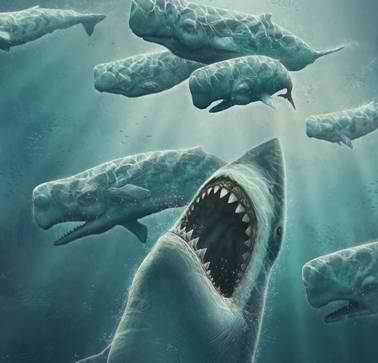
10 - Megalodon

Megalodon is probably the best-known creature in the list; it’s hard to keep the idea of a shark the size of a school bus out of pop culture. Plus, science-minded entertainment sources like the Discovery Channel love creatures that could pass for a movie monster. Despite the popular idea that Megalodon coexisted with dinosaurs, they lived from 25 to 1.5 million years ago, meaning that at best they missed the last dinosaur by 40 million years. On the other hand, this meant they might have still been around for the first humans. Eek.

Megalodons swam the warm oceans that were around until the last ice age in the early Pleistocene, which may have robbed them of their breeding grounds and food. Sometimes, it seems nature has our back.
9 - Liopleurodon

If Jurassic Park had an aquarium scene, and actually featured more animals from the Jurassic period, liopleurodon probably would have been in it. Although the actual length of these beasts is contested (some scientists have claimed lengths in excess of 50’), most agree that it was around 20 feet in length, with a full fifth of that being pointy-toothed head. When the mouth of the “smaller” estimate is still plenty large to eat you whole, I think that is perfectly huge enough.
Scientists have tested the paddle design of these creatures on small swimming robots and found that although they would not have been incredibly fast, they were incredibly agile. They also would have been able to make short, fast burst attacks like crocodiles, which in no way makes them any less intimidating
8 - Basilosaurus

Despite the name and appearance, that is not a reptile, but actually a whale (and not even the most fearsome on the list!) Basilosaurs were predatory ancestors of modern whales, and could be 50 to 85 feet long! It is described as being the closest a whale has ever come to being a snake because of how long and sinuous it was. Imagine swimming in the ocean with an 80+ foot long alligator-snake-whale. Now imagine being afraid to even take a bath ever again.
Physical evidence suggests that basilosaurus did not have the cognitive ability of modern whales, nor the ability to echolocate, and could only navigate in 2 dimensions (so no deep diving or breaching). So at least this monster whale was dumber than a bag of prehistoric hammers and could not chase you if you dove or scrambled out on dry land, probably forever.
7 - Jaekelopterus rhenaniae

Nothing about the words “sea scorpion” are comforting to begin with, so this should not come off as too awful: this was one of the two largest arthropods to have ever lived, reaching a length of over 8 feet of armored, clawed horror. Most of us freak out at the thought of inch-long ants and foot wide spiders, so it’s easy to imagine screaming like a little girl if you ever stumbled across a living one of these.
On the plus side, sea scorpions (Euripterids) have been extinct since before the dinosaurs, having been wiped out in the Permian Triassic extinction event (which killed 90% of all life on earth) and are only survived, to some degree, by horseshoe crabs, which are even less formidable than regular crabs. There is no evidence that any sea scorpions were actually venomous, but the structure of their tail is similar to a modern scorpion’s, so it might have been.
6 - Mauisaurus

Mauisaurus was named after the Maori god Maui, who pulled the islands of New Zealand up from the sea floor with a fish hook, so already you know this thing is going to be enormous. The neck of Mauisaurus measured up to 49 feet long; the longest proportionate (and really, “actual”) neck of any living thing aside from some sauropod dinosaurs. Their overall length was about 66 feet, and that ridiculously long neck had plenty of vertebrae, implying that it was flexible. Imagine a snake strung through a sea turtle with no shell, and you have an approximate idea of what this thing looked like.
It lived back in the Cretaceous era, meaning that creatures that jumped in the water avoid Velociraptors and Tyrannosaurs had to contend with these; the jury is out on which is worse. As far as science can tell, Mauisaurus was limited to the New Zealand area, showing that the area that would one day become Australia and its neighbors was always a land of terror.
5 - Dunkleosteus

Dunkleosteus was a 30 foot long carnivorous tank. It was outlasted by sharks, but I am sure that is small consolation for the variety of creatures this beast ate. Instead of teeth, it had bony ridges, like a turtle. It has been calculated that they had a bite force of 8,000 pounds per square inch, putting it on par with crocodiles and T-Rex in terms of being history’s strongest biters. They also believe, based on the evidence in the skull regarding its musculature, that it could have opened its mouth in one fiftieth of a second, meaning it vacuumed food into its guillotine of a mouth.
The plates that made up the “teeth” changed as the fish aged from a solid, rigid jaw to segments that allowed it to hold prey easier, and made it more effective in biting through the bony plate armor of other armored fish. In the arms race that was the prehistoric ocean, Dunleosteus was a predatory super tank.
4 - Kronosaurus

Kronosaurus is another short-necked pliosaur (like Liopleurodon up at number 9), and like Liopleurodon, its overall length has been contested. It was a “mere” 30 feet long and the longest teeth in its massive mouth were up to 11 inches long. This is why it was named after Cronus, the king of the old Greek Titans.
Guess where it lived? If you guessed “Australia”, then you have been paying attention to life (and are correct). The head was up to 9 feet long. They could eat an entire modern man whole, and still have room left over for half of another. It has also been suggested that since their flippers are so similar in design to those of modern sea turtles, that they may have crawled out onto land to lay eggs. You can be sure no one was digging up these thing’s nests to get at the eggs.
3 - Helicoprion

These sharks grew to be about 15 feet long, and had a lower jaw that was made of a “tooth whorl”. It looks like a cross between a circular saw and a shark, and when you mix apex predators with power tools, the world quakes in fear.
Helicoprion’s teeth were serrated, implying that they were definitely carnivores, but there is some debate as to whether their teeth were in the front of the mouth, as shown in the picture, or if they were farther back, which would suggest a softer diet, like jellyfish. However it was arranged, it clearly worked; Helicoprion survived the Permian Triassic extinction, which means they may have been smart enough to create bomb shelters. Or maybe they just lived in the deep sea.
2 - Livyatan melvillei

Remember me mentioning “hypercarnivorous” whales? Well here it is. Imagine a cross between an orca and a sperm whale. Livyatan melvillei was a whale that ate other whales. It had the largest teeth of any animal to ever use their teeth to eat (elephant tusks are bigger, but they just look impressive and help them smash things; they don’t eat with them) topping out at 1.18 feet. They lived in the same oceans and ate the same food as the Megalodon, so this whale actually had to compete with the largest predatory shark ever.
Not to mention their head was 10 feet long and featured the same echo-locating equipment as modern toothed whales, making them much more effective in murky water. In case it was not obvious, this beast was named after the leviathan, a giant sea monster from the bible, and Herman Melville, who wrote Moby Dick. If the great white whale had been one of these, it would have eaten the Pequot and everyone aboard as a snack.
1 - Giant Stingray

What grew 17 feet across, had a 10 inch poison spike in its tail and was strong enough to drag a boat filled with people? In this case, a prehistoric super-fish that is still lurking around in fresh and brackish waters from the Mekong river to northern Australia. Stingrays have been around since a few million years after the dinosaurs died out, and have proven to be a successful design, much like the sharks they descended from.
The giant stingrays use that tried and true ancient design, but have somehow managed to survive ice ages and even the catastrophic Toba event. They were featured on Animal Planet’s River Monsters, and despite the host’s tendency to exaggerate damn near everything, they are incredibly dangerous to fool around with, even if you don’t know you are fooling around with one. They are notorious for putting their neurotoxin covered spike completely through limbs. I guess, on the plus side, if there is one, at least they won’t try to eat you.

Kamis, 09 Juni 2011

10 of World's Smallest Animals/Creatures

There is something neat about small animals. Even Hollywood's elite enjoy carrying around the diminutive Chihuahuas as a symbol of their status. Whether it's because they look like a baby version of their larger ancestor or because they are so odd, small creatures often attract attention from people.

1 - World’s Smallest Dog: 12.4 cm (4.9-inch) tall

At 1.4 pounds and 4.9 inches tall, Ducky, a yappy short-coat Chihuahua from Charlton (Massachusetts, USA), holds the Guinness World Record for the world's smallest living dog (by height). Ducky succeeds Danka Kordak of Slovakia, a Chihuahua who measured 5.4 inches tall. The smallest dog ever, according to Guinness, was a dwarf Yorkshire terrier who stood 2.8 inches tall.


2 - World's Smallest Snake: 10.1 cm (4-inch) long

Leptotyphlops carlae is the world's smallest species of snake, with adults averaging just under four inches in length. Found on the Caribbean island of Barbados, the species --which is as thin as a spaghetti noodle and small enough to rest comfortably on a U.S. quarter-- was discovered by Blair Hedges.


3 - World’s Smallest Fish: 7.9 mm (0.3-inch) long

On January 2006, the world's smallest fish was discovered on the Indonesian island of Sumatra: a member of the carp family of fish, the Paedocypris progenetica. It is the world's smallest vertebrate or backboned animal; only 7.9 mm (0.3 inches) long.

The title, however, is contested by 6.2 mm (0.2 in) long male anglerfish Photocorynus spiniceps (not technically a fish but a sexual parasite) and the 7 mm (0.27 in) long male stout infantfish Schindleria brevipinguis.


4 - World’s Smallest Horse: 43.18 cm (17-inch) tall

The little horse was born to Paul and Kay Goessling, who specialize in breeding miniature horses, but even for the breed Thumbelina is particularly small: she is thought to be a dwarf-version of the breed. At just 60 lb and 17-inch tall, the five-year-old Thumbelina is the world’s smallest horse.


5 - World’s Smallest Cat: 15.5 cm (6.1-inch) high and 49 cm (19.2-inch) long

Meet Mr. Peebles. He lives in central Illinois, is two years old, weighs about three pounds and is the world's smallest cat! The cat's small stature was verified by the Guinness Book of World Records on 2004.


6 - World's Smallest Hamster: 2.5 cm (0.9-inch) tall

Only slightly bigger than a 50p piece, PeeWee is the smallest hamster in the world. Weighing less than an ounce, the golden hamster stopped growing when he was three weeks old - his five brothers and sisters went on to measure between 4in and 5in.


7 - World's Smallest Chameleon: 1.2 cm (0.5-inch) long

The Brookesia Minima is the world's smallest species of chameleon. This one is just half an inch. Found on the rainforest floor of Nosy Be Island off the north-west coast of Madagascar, females tend to be larger than males.


8 - World's Smallest Lizard: 16 mm (0.6-inch) long

So small it can curl up on a dime or stretch out on a quarter, a typical adult of the species, whose scientific name is Sphaerodactylus ariasae is only about 16 millimeters long, or about three quarters of an inch, from the tip of the snout to the base of the tail. It shares the title of "smallest" with another lizard species named Sphaerodactylus parthenopion, discovered in 1965 in the British Virgin Islands.


9 - World’s Smallest Cattle: 81 cm (31-inch) height

The world’s smallest cattle is a rare breed of an Indian zebu called the Vechur cow. The average height of this breed of cattle is 31 to 35 inches (81 to 91 cm). The photo above shows a 16 year old Vechur cattle as compared to a 6 year old HF cross-breed cow.
10 - World's Smallest Seahorse: 16 mm (0.6-inch) long

The creature, known as Hippocampus denise, is typically just 16 millimetres long - smaller than most fingernails. Some were found to be just 13 mm long. H. denise lives in the tropical waters of the western Pacific Ocean, between 13 and 90 metres beneath the surface.