Tampilkan postingan dengan label Best in Philippines. Tampilkan semua postingan

Selasa, 10 Januari 2012

10 of the Must-Try Adventure Places in the Philippines

Sometimes, the ones who are bound to you are the one who makes a great influence to you. Sharing a story to a friend about the places you’ve been is good, but bringing them to that place and letting them feel and experience the same feeling of what you have felt when somebody have shared it to you is better.
We only have three seasons of life:

a. Full of energy, lots of time, but no money
b. Full of energy, lots of money, but no time
c. We have lots of money, lots of time, but no more energy


What season are you now? When will you be able to do outdoors and have some adventures? May these pieces of pictures encourage those people out there to see ten of the many magnificent art works of God, from mountains to beaches, from ocean and seas to waterfalls, from boulders to caves, from northern part of the Philippines to the southern part of the country, Swim, hike, and explore!

1 - Mt.Pulag, Kabayan Benguet


Mt. Pulag also known as the “Playground of Gods”, standing at 9,586 feet above sea level, found in the Cordillera region of Central Luzon, is the highest mountain in Luzon and second highest in the Philippines next to Mt. Apo. The Mt. Pulag National Park is open all year round. Dry season is the best time to trek up to the summit preferably from the month of November to March for you are able to witness breath taking sea of clouds.

Most of its visitors and guests were attracted not only in its low temperature and spectacular sea of clouds, but also on its unique characteristics for its rolling plains, mossy forest and an amazing eye soothing greens which defines its biodiversity. You can camp on the top but only on designated areas. Be sure that you have warm clothing to protect yourself in cold weather as the temperature drops.

The mountain is classified as a major climb with its five defined trails to reach on to the summit which defines it difficulty. These are the Ambangeg trail, also known as the executive trail and the easiest, the Eddet trail, Tawangan trail, Ambaguio trail, and the Akiki trail which is said to be the most difficult among the five.

2 - Lipata Caves


(Lipata Caves of Quezon Province) From Lipata Island is said to have seven 7 Caves which called the Lipata Caves. The said island is found at the Bondoc Peninsula in Quezon which takes you 3-4 hours drive from Manila.

It will take you a 20-30 minutes boat ride from the Padre Burgos Pier, the jump off area, to the island. From the Island a 15-20-minute trek will transpire you to see rock formations at the side of the mountain and amazed with the stalactites and lime stones inside the caves. You can also witness the view of the sea from above along the trail.

The rock formation inside the caves gives amazement into its visitors. The soil of Lipata caves are rich in minerals which are transported by the residents all the way down to the foot of the mountain which is used for growing their crops. However, mining in the caves is prohibited. This activity will surely destroy the caves’ natural rock formations.

3 - Dampalitan Island


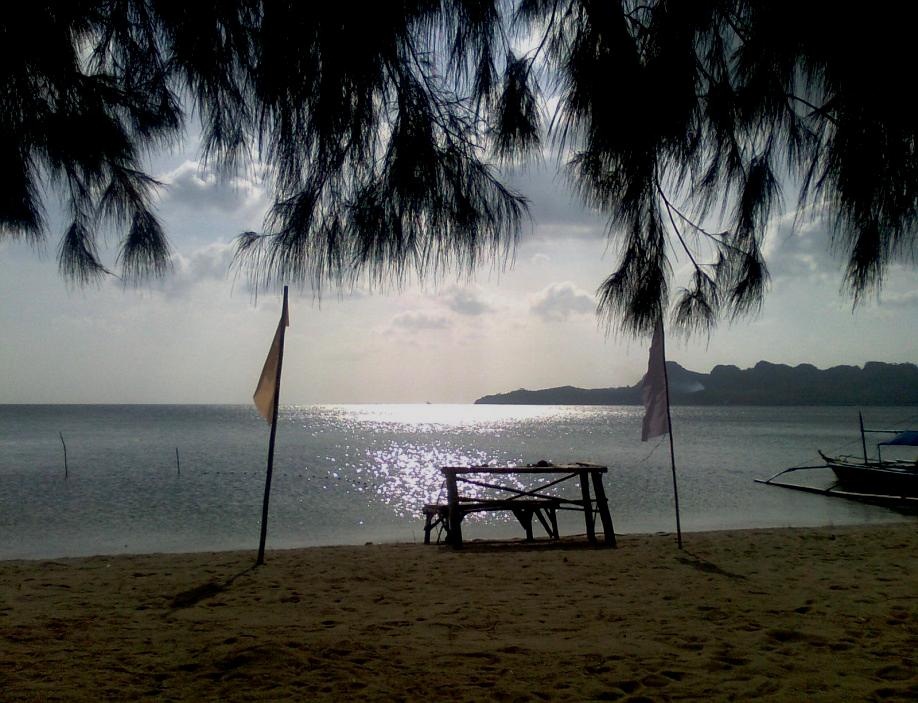
From the province of Quezon lies an island name Dampalitan. Its white sandy beach and long stretch shorelines attracts most of its visitors. The beautiful long stretch of the beach and quiet place returns a peaceful and relaxing experience with nature.

Rocky formation will be seen during the low tide. You can even take your photo almost at the middle of the sea. Take those shots while enjoying the light of the sunset in the place.
A bench near the seashore is best for a seat to watch on the dramatic scene of a sunset along with your best friend or love ones.

4 - Borawan Island


Not far from the Dampalitan Island is the Borawan Island which is name after the combination of Boracay and Palawan for its characteristics of white sand and huge rock formations similar to that of Palawan’s cliffs. You can enjoy the beautiful scenery of the place with its crystal clear water, and long stretch white beach at the west coast of the island.

You can climb on to the top of the huge rocks ranging from 15-20 feet high allows you to view the west and east coast of the island and take shots of your pictures. Be careful on climbing because the edges of the rock are quite sharp.

Camping is allowed in the island, but make sure that you have your head lamps, flash light, extra batteries, and drinking water with you. There is no electricity and fresh water available in the area. If you are avoiding a crowd in the place, you can visit the island before the summer euphoria begins.

5 - Pagbilao Grande Island (Isla Putting Buhangin)


Pagbilao Grande Island in Pagbilao Quezon is also called as “Isla Putting Buhangin” with its fine white sand. It’s cold crystal clear water and white sand stretch attracts its guests. In here also found the “Kwebang Lampas”, a cave located at the east point of the stretch, and one of the highlights when you go in Pagbilao Grande.
The water here is more ideal for swimming compare to the nearby islands of Borawan and Dampalitan. The Pagbilao GrandeIsland is not that crowded with people compared with other beach resorts near it. You can go to the cave known as the “Kwebang Lampas” by passing through the rocky area at the side of foot of the cliff at the east point of the island. Be careful of the slippery rocks you may encounter while going inside the cave. Cold and relaxing views from the cave will definitely sooth you to the nature.

6 - Cape EngañO in Palaui Island


It is like a secret paradise to witness a captivating view of the Dos Hermanos Island from the Cape Engano Lighthouse also known as the “Farol de Cabo Engano”. Located at northern point of Palaui Island, Sta.Ana, Cagayan, an 18th Century light house built during the Spanish time which guides the ships on the coastal areas of Sta.Ana. 229 steps of concrete stair and a trail will lead you all the way to the lighthouse.

Palaui Island was declared as a National Marine Reserve in August 28, 1994 encompassing an area of 7,145 hectares (17,660 acres). The waters around the island boast of 21 commercial species of fishes with about 50 hectares (120 acres) of undisturbed corals.

The hike from Punta Verde, the southeast tip of Palaui, to Cape Engaño takes about 3.5 to 4 hours of hike through beautiful verdant scenery. Primitive camping is allowed at the lighthouse vicinity. [source: wikipedia]

7 - 7 Chambers of Callao Cave in Cagayan


The Callao Cave is located on the Province of Cagayan near Tuguegarao City. According to the locals, the cave has seven chambers and formations namely as the Column, Chapel, Skeleton, Elephant’s Head, Praying Angel, Rocket, Lion’s Head, and the Dog’s Head; the 7th chamber is usually closed except during the holy week.

The photo above is the second chamber of the cave which became a Cathedral by the locals of Cagayan. Each chamber allows the natural light to enlighten the dim areas of the cave. Before witnessing the magnificent cave of stalactites and stalagmites, you have to pass the test of your stamina by surpassing a stair with approximately 200 steps. It said that there are still unexplored areas after the seventh chamber of Callao Cave.

[1] Callao Cave has gained another reputation after the discovery of a foot bone on a excavation done near the first chamber's entrance was proven by archaeologist to be about 67,000years old pushing back the long known Tabon man of being the oldest discovered human remains in the country. this did not just brought a new record within the country but has also placed the Philippines in the sixth position worldwide to have found the oldest Homo sapien fossil.

[source:dong ho’s eskapo 3.0, digital photographers philippines]

8 - Merloquette Falls in Zamboanga


From the Latin City of Asia, Zamboanga, found a magnificent piece of hidden treasure in Merloquete Falls, located at Sitio Merloquet, Barangay Sibulao, Zamboanga City. An approximate 2 hours drive from the city all the way to the jump off. From the jump off, it will drive your excitement band test your endurance by a 15 minutes downhill trek before witnessing the enchanted and majestic waterfall.

Measuring with an estimated width of 13 meters wide and a height of 10 meters high, the soothing sound of the water will surely amazed you. The second water fall with an estimated width of 8 meters wide and a height of 5 meters high lie above the first one that will test your endurance to witness its beauty. It is said that there are eleven waterfalls above the first one that is rarely visited and explored.

9 - Mt.Gulugod Baboy and Anilao Boulders


Not from afar from an overnight hike to Mt. Gulugod Baboy in Mabini Anilao, Batangas, was an amazing side trip to witness scattered boulders of rocks near at the beach. It was really surprising to see and walk on through the rock before having a swim in the clear waters of Anilao.

Anilao Batangas is well known as one of the best diving sites not only in the Philippines but all over the world. Unknowingly, there is a secret place for explorers and hikers to hangout out there to discover and see the beauty of these boulders with the strong waves splashing and playing on it.

At the end of the rocky stretch found a small cave where in you can stay. From there, you can choose where to swim by passing through it. You can also see bats inside the cave when you look upward inside, and requires you for a duck walk to pass through the other side and enjoy beautiful scenery of the sea.

10 - Mt. Makiling in Los Banos Laguna


Mt.Makiling situated at Los Banos Laguna is one of the known enchanted mountains in the Philippines because of the mystical Diwata (fairy) Maria Makiling who takes care of the mountain. According to te locals, you can encounter Diwata Maria Makiling in three persons, you can see her as a maiden, a mother, and an old woman along the trail while trekking on the mountain.

Rising with a 1109 meters above sea level, Mt.Makiling is not just simply an enchanted mountain, but classified as a volcano. It is one of the most challenging must try day hike that probably test your patience and thrill you into the adventure.

[1]The Makiling Traverse is a classic example of an extended dayhike - a climb whose trekking time makes it a "major climb" but whose trail circumstances favor a long dayhike. It is a favorite training climb for mountains that are Difficulty 8/9 or higher - such as Mt Guiting-Guiting - and for good reason: a Makiling Traverse gives hikers a preview of extended hiking (8 hours/day) over a period of three or even four days. Moreover, Makiling gives samplers for various. Melkas Ridge, for example, is an introduction to the long rock scrambling of Guiting-Guiting; the proliferation of limatik and jungle density is the same environment of Halcon; and the meanderings of the Wild Boar Trail evoke Napulauan. Finally, the 'thrill' of a traverse is a junior version of what it takes to cross over Dulang-Dulang to Kitanglad, or Kidapawan to Kapatagan.

[source: Pinoy mountaineer]

About Desha, the author

Des Alimbuyuguen is an adventurous girl who have the passion for the love of nature. She is often called the "Backpacker Girl" since she often go for nature camping with her mountaineer friends.

Senin, 07 November 2011

10 of the Most Delectable Filipino Native Delicacies

Filipino native delicacies, known as kakanin, are popular snack foods that are usually served as merienda or desserts. Kakanin are native delicacies made of malagkit (glutinous rice), which comes in two varieties: the first-class variety that is sweet, rounded and white and the regular variety that is longish and translucent. The word kakanin is derived from kanin, Tagalog for rice. The three basic ingredients are malagkit or glutinous rice, coconut milk or gata, and sugar.

Filipinos love of kakanin can be traced way back pre-colonial times when our ancestors used suman as offering to gods and visitors. I remember when I was a child and used to help my Inang, a native of Bulacan, grind soaked glutinous rice in a huge grindstone (gilingang bato) to make galapong to be used in making sapin-sapin or kalamay or bibingka. We used to spend hours in this process and usually need to take turns with my cousins to finish grinding several kilos of malagkit to be used in making sapind-sapin or kalamay or other kakanin depending on the occasion. My Inang wanted to do it the traditional way even if milling services are available, just as her mother and grandmother used to do it.

Kakanin are usually present on special occasions such as weddings, birthdays, anniversaries, and fiesta. No celebration is complete without these kakanin being served in the table. They are especially popular during the Holiday Season and since Christmas and New Year is just around the bend, let’s take a delicious look at 10 of the Most Delectable Filipino Native Delicacies.

1 - Sapin-Sapin

Sapin-Sapin is a native dessert made from glutinous rice flour, purple yam or ube, coconut cream and sugar. It is a multilayer rice cake with different colors usually white, yellow and purple. The texture is very fine and should melt in your mouth without spending much time chewing it. It is topped with latik.

2 - Biko

Biko is a Filipino rice cake made from glutinous rice, coconut milk, and brown sugar. Traditionally, this delicious rice cake is placed over banana leaves in a bilao and garnished with latik on top. Other variations of biko will have a custard like topping or matamis na bao (caramel like topping) instead of latik.

3 - Kalamay-Hati

Kalamy-hati is a native kakanin or rice cake made from ground sticky rice, sugar, mascuvado, coconut milk and sesame seeds. It is brownish in color and is very sticky that you will almost spend your whole time chewing it. It’s not easy to prepare as you have to spend around 2 hours cooking it with continuous stirring to achieve the tough-leathery texture (makunat). It is usually stored inside empty coconut husk or bao.

4 - Suman

Suman is a famous kakanin made from glutinous rice and usually wrapped tightly in leaves. The leaf wrapper—banana, palm, buri or pandan—varies according to locality. Filipinos have been making suman since pre-colonial times. Antonio Pigafetta, an Italian scholar and explorer who travelled with Ferdinand Magellan, provides the first description of suman in historical records which he observed “were wrapped in leaves and were made in somewhat longish pieces.”

5 - Kutsinta

Kutsinta is another native delicacy that is sweet, sticky, and golden brown rice pudding that is made from ground malagkit. Achuete is used for coloring and lye is added to improve its texture. The kutsinta ingredients are put into molds and steamed for 15 minutes. It is usually served with freshly grated coconut.

6 - Palitaw

Palitaw is made from ground glutinous rice and sugar and got its name from the manner it is cooked. It is quite easy and fun to make as all you have to do is form into small balls the ground malagkit and flatten with fingers to form tongues. Drop in boiling water, when they float (lumitaw or lumutang), skim and drop in cold water. Drain and roll in mixed grated coconut, sugar and sesame seed mixture and you’re done!

7 - Puto

Puto is a steamed rice muffin made from galapong or rice flour. It is traditi onally in plain white color but adding ube (purple yam) or pandan can create variations in flavor and color. It is usually being sold with kutsinta but Filipinos love to eat puto together with Dinuguan. A more recent variation of puto is the Puto Pao that has a meat filling just like the Siopao.

8 - Espasol

Espasol is a type of rice cake that is made of rice flour cooked in coconut milk. This cylindrically shaped treat originated from the Province of Laguna. Cooking the glutinous rice flour, sugar and toasted grated coconut mixture usually takes an hour as the mixture needs to become really thick to achieve the right consistency. Once cooled, it is then cut into desired size and rolled over dusted sweet rice flour until a cylindrical shape is formed.

9 - Puto Bumbong

Puto Bumbong is traditionally made from a special variety of heirloom sticky or glutinous rice called Pirurutong which has a distinctly purple color, soaked in salted water and dried overnight and then poured into bumbong or bamboo tubes and then steamed until done or steam rises out of the bamboo tubes. It is served topped with butter or margarine and shredded coconut mixed with sugar. It is a favorite among church goers, along with Bibingka, during Simbang Gabi or Christmas Eve Mass.

10 - Bibingka

Bibingka is a most sought after kakanin during Christmas Season traditionally served w ith salabat and sold alongside Puto Bumbong. It is a round rice cake made with galapong, sugar and coconut milk. It is cooked in a banana leaf-lined clay pan , with coals underneath and on top. It is topped with salted duck eggs or itlog na maalat and kesong puti. Once cooked it is brushed with butter, and is garnished with sugar and grated coconut and is served while hot.

    About Marvs Correa, the author

    He is a simple blogger who have the passion of sharing the most relevant information, news and everything else under the sun. InfoHiway is his first venture into blogosphere where he is the site admin. His current favorite top is this black shirt with a Chupa Chups logo and is still wondering why it is so.

Selasa, 01 November 2011

10 of the Most Visited Places in the Philippines

Philippines is one blessed country as it has many beautiful tourist attractions, historical richness and prosperous bounty of nature’s produce. Its location gives it a greater advantage for many people as this gives only two types of weather which is rainy and sunny climates. Philippines consist of more than 7,100 islands thus making it a good island hopping country to stopover. Visiting Philippines is a great experience as you can see the wonders of its beauty and the hospitality of the people living in it.

As I have said, there are many beautiful places and must-see places in the Philippines and going in these places can be quite memorable and also fun. Such places may consist of different landmarks and beautiful terrains or even historical markers dating way back from the invasion of Spaniards, Japanese attacks and many more.

Although there are still many beautiful places to set out in the Philippines, these are the places that I consider a must-see:

1 - Boracay

This place is well-known for its long white, sandy beaches and great nightlife parties. This is a great tourist destination located in the Visayan region and is a must-place to visit for local and foreigner visitors. Trendy bars, discos and water sports are one of the activities in this place.
2 - Mount Pinatubo

This volcano has been famous in the year 1990s as it has once caused great problems not only in the Philippines but also for many parts of the world during its greatest eruptions.
3 - Intramuros

A city found in Manila famous for its walled area and had been a historical landmark for Spanish settlements. This city has historical museums and ruins that are preserved for tourists to see.
4 - Camp John Hay

This is a place in Baguio, the summer capital of the Philippines. This area is a nice place to visit since it contains historical backgrounds dating back from American settlements. They also have a place for recreation such as golfing, horseback riding and camping.
5 - Mount Apo

If you want to enjoy mountain trekking then Mount Apo can be a good place. This awe-inspiring volcano can be found in Davao and in this place, you can also find the famous Philippine Eagle which is the biggest in the world.
6 - Palawan

It is a famous tourist spot as it contains many beautiful beaches, rich forest and caves that can be a good place to visit. There are many activities in this place such as snorkeling, paddling and many others.
7 - Dapitan

It is located in the Zamboanga province and is famous for the place where Rizal, the Philippine national hero was exiled. They also have white beach named Dakak.
8 - Surigao

When you are in for great waves to surf then Siargao is the good place to be. This island is in Surigao and is the surfing sanctuary for many surf lovers.
9 - Cebu

A tourist place identified to have the historical landmark where Magellan, a Spanish adventurer was defeated by Lapu-lapu thus the existence of the Magellan’s Cross. There are also many night life activities going on in this place.
10 - Camiguin

This small island in Mindanao is known for their Lanzones fruits, underground cemetery, white sand beaches and great island sceneries.
These great places are a must-see places when you are visiting Philippines and they can good places to spend your holidays with families and friends.

    About Herbert Kikoy, the author

    is the sole blogger of Locally Made, and an SEO Manager at Mayhem New Media, a UK based SEO Company.

Rabu, 25 Mei 2011

10 of the Best Universities in the Philippines 2011


Finding a good school to study is a quite tricky thing. You have to find out their competitiveness and least assured that when you graduate will end up high recommendation to your career. So Always10 is here to help you select schools to study in the Philippines. Topuniversities.com has recently released the top 200 Asian universities lists for 2011 and of course, the big three are included in the list. (also see 10 of World's Top Universities 2010)

Here are the best Universities in the Philippines: (Rank, Name, Asian Universities Rank Spot, Score)

1 - University of the Philippines
Asian Rank: 62
Score: 58.10


The University of the Philippines (Unibersidad ng Pilipinas in Filipino, commonly abbreviated as U.P. and colloquially referred to as Peyups) is the national university of the Philippines. Founded in 1908 through Act No. 1870 of the first Philippine Legislature, known as the "University Act" by authority of the United States, the University currently provides the largest number of degree programs in the country. Senate Resolution No. 276 of the Senate of the Philippines recognizes the University as "the nation’s premier university". Seven of fifteen (15) Philippine Presidents have attended courses in the University either as undergraduates or as postgraduate students, while 12 Chief Justices of the Supreme Court, 36 out of the 57 National Artists and 34 out of the 35 National Scientists are affiliated with the University.
U.P. has the most National Centers of Excellence and Development among higher education institutions in the country and one of only three schools in Asia that have received institutional recognition in the Ramon Magsaysay Awards.
U.P. is partly subsidized by the Philippine government. Students of the university and its graduates are referred to as "[Mga] Iskolar ng Bayan" ("Scholars of the Nation"). This makes admission into the University extremely competitive. In 2006, 70,000 applicants flocked to test centers to take the University of the Philippines College Admission Test (UPCAT) for undergraduate admission. Around 11,000 of the applicants were admitted for the year 2006, an acceptance rate of about 18% for the whole of the UP system.
2 - Ateneo de Manila University
Asian Rank: 65
Score: 57.20


The Ateneo de Manila University (also called Ateneo de Manila or simply the Ateneo) is a private teaching and research university run by the Society of Jesus in the Philippines. It began in 1859 when the City of Manila handed control of the Escuela Municipal de Manila in Intramuros, Manila, to the Jesuits. It was then a state-subsidized school. It became a private school during the American occupation of the Philippines, and has moved from Manila to its current location. It received its university charter in 1959.
Its main campus in Loyola Heights, Quezon City, Metro Manila is home to the university's college and graduate school units, as well as its high school and grade school. Two other campuses, in Rockwell Center and Salcedo Village, both in Makati City, house the university's professional schools of business, law, and government. A fourth facility in the Don Eugenio López, Sr. Medical Complex in Ortigas Center, Pasig City houses its school of medicine and public health.
The Ateneo offers programs in the elementary, secondary, undergraduate, and graduate levels. Its academic offerings include the Arts, Humanities, Business, Law, the Social Sciences, Philosophy, Theology, Medicine and Public Health, Biology, Chemistry, Physics, Mathematics, Computer Science and Information Technology, Engineering, Environmental Science, and Government. Aside from teaching and research, the Ateneo de Manila also engages in social outreach.
It was granted Level IV accreditation--the highest possible level—from the Commission on Higher Education (CHED) through the Federation of Accrediting Agencies of the Philippines (FAAP) and the Philippine Accrediting Association of Schools, Colleges and Universities (PAASCU). Its was reaccredited at the same level, and was likewise granted Institutional Accreditation by the same body in 2011, the first time that both citations were awarded to a university simultaneously.
It is also one of few universities granted autonomous status by CHED, which likewise recognizes a number of the University's programs and departments as Centers of Excellence and Centers of Development.
Its grade school and high school have been granted Level III accreditation by PAASCU and FAAP, the highest possible level for basic education.
3 - University of Santo Tomas
Asian Rank: 104
Score: 47.10


The Pontifical and Royal University of Santo Tomas, The Catholic University of the Philippines (colloquially UST or "Ustê". Filipino: Unibersidad ng Santo Tomas), is a private Roman Catholic university run by the Order of Preachers in Manila. Founded on April 28, 1611 by archbishop of Manila Miguel de Benavides, it has the oldest extant university charter in the Philippines and in Asia. and is one of the world's largest Catholic universities in terms of enrollment found on one campus. UST is also the largest university in the city of Manila. As a Pontifical University in Asia, UST is the only university to have been visited by two popes three times: once by Pope Paul VI on Nov. 28, 1970, and twice by Pope John Paul II on Feb. 18, 1981 and January 13, 1995.
The University is composed of several autonomous faculties, colleges, schools and institutes, each conferring undergraduate, graduate and postgraduate degrees, and the basic education units. Several degrees have been accredited by the Commission on Higher Education as Centers of Excellence and Centers of Development.
4 - De La Salle University
Asian Rank: 107
Score: 45.90


De La Salle University (Tagalog: Pamantasang De La Salle) (also referred to as DLSU or La Salle) is a private La Sallian university in Malate, Manila, Philippines. It was founded in 1911 by De La Salle Brothers as the De La Salle College in Paco, Manila with Blimond Pierre serving as its first director. The college moved in September 1921 to its present location to facilitate increase in enrollment. DLSU, granted university status on February 1975, is the oldest constituent of De La Salle Philippines (DLSP), a network of 17 La Sallian institutions established in 2006 to replace the De La Salle University System.
The university started as a boys' elementary and high school. It started offering in 1920 a two-year Associate in Arts in Commerce program, which was later discontinued in 1931 in favor of a Bachelor of Science in Commerce program. DLSU currently offers coeducational undergraduate and graduate degree programs through its seven colleges and one school specializing in varied disciplines, including business, engineering and liberal arts.
The university, currently under the administration of President Narciso S. Erguiza, is a member of several international university associations (including the ASEAN University Network and International Association of Universities) as well as local organizations (such as the South Manila Inter-Institutional Consortium).
DLSU is identified by the Philippine Commission on Higher Education (CHED) as a "Center of Excellence" in six of its programs, and a "Center of Development" in the same number of programs. The university is also among the 40 institutions granted autonomous status by CHED as of 2010. Likewise, it is the first of the only two institutions granted the highest-level accreditation (Level IV) by the Philippine Accrediting Association of Schools, Colleges and Universities (PAASCU). The university ranks 107th and 451st in the 2011 Asian University Rankings and 2010 World University Rankings, respectively, published by Quacquarelli Symonds.
Research is mainly funded by the De La Salle University Science Foundation. Since 2000, DLSU has been the CHED Zonal Rsearch Center for 10 cities in southern Metro Manila. As such, it evaluates research proposals for recommendation for CHED funding, and monitoring of CHED-funded researches, among others. DLSU research has focused on affective computing and renewable energy. Application of its research has resulted to electrification of remote areas in the country through the use of micro hydro generators, and the creation of both of the only two solar cars of the Philippines, SINAG and SIKAT.

Since the Asian rankings only prioritize top 200, We continue the list below according to their score.

5 - University of Southeastern Philippines
Asian Rank: 201+
Score: 18.70


The University of Southeastern Philippines (USeP) is a regional state university created in 1978 through Batas Pambansa Bilang 12. The university is an integration of four state institutions: Mindanao State University-Davao, the University of the Philippines-Master of Management Program in Davao, the Davao School of Arts and Trades, and the Davao National Regional Agricultural School.
The university has four campuses: Obrero (main) and Mintal campuses in Davao City, Tagum-Mabini Campus which has two units — one in Tagum City and one in Compostela Valley Province — and Bislig Campus in Surigao del Sur.
6 - Xavier University
Asian Rank: 201+
Score: 16.40


Xavier University – Ateneo de Cagayan is a private, Roman Catholic university run by the Society of Jesus in Cagayan de Oro, Philippines.
It was founded on June 7, 1933 as the Ateneo de Cagayan by an American Jesuit missionary, Fr. James T.G. Hayes, S.J., D.D., who later became the first Archbishop of Cagayan de Oro. In 1958, Ateneo de Cagayan became a university and was renamed to its present name, Xavier University, in honor of the Jesuit missionary, St. Francis Xavier.
There were at least two attempts by the alumni of the then Ateneo de Cagayan to revert the name of the University to Ateneo de Cagayan. The first attempt was in the mid 1990's and the second attempt was in 2007. These attempts were, however, not widely supported and in the case of the 2007 proposal, not endorsed by the Xavier University – Ateneo Alumni Association (XU–AAA). Until today, the debate still continues.
7 - Central Mindanao University
Asian Rank: 201+
Score: 13.60


Central Mindanao University is one of the two universities in the province of Bukidnon, Mindanao Island in the Philippines.


8 - Mapua Institute of Technology
Asian Rank: 201+
Score: 11.40


Mapúa Institute of Technology (MIT, Mapúa Tech or simply Mapúa) is a private, non-sectarian, Filipino tertiary institute located in Intramuros, Manila and in Makati.
It was founded by the first registered Filipino architect, Don Tomás Mapúa in 1925, a graduate of Cornell University. After he died, the tradition was continued by his children, Don Óscar B. Mapúa Sr., a graduate in Civil Engineering from the Massachusetts Institute of Technology, and Gloria Mapúa-Lim.
The Institute is a reputable source of architects, engineers, and science graduates and constantly produces top notchers in the architectural and engineering fields as the Mapúa Institute of Technology heavily specializes in these fields in the undergraduate and graduate levels, aside from its widening array of undergraduate programs such as Computer Science, Multimedia Arts and Sciences, Information Technology, Accounting, Entrepreneurship, Business Management, Hotel & Restaurant Management, and Nursing.
The Institute has been granted with the Level IV Accredited Status to its Civil Engineering program by the Philippine Association of Colleges and Universities Commission on Accreditation (PACUCOA), which is one of the first engineering programs to be accorded such status. In addition, the Commission on Higher Education (CHED) recently recognized Mapúa’s Mechanical Engineering (ME), Computer Engineering (CpE) and Electronics Engineering (ECE) programs as Centers of Development for Engineering (COD).
Mapua is also the first Philippine and Southeast Asian educational institution to have ABET certification, rendering the Institute to be at par with US-based colleges and universities.
9 - Adamson University
Asian Rank: 201+
Score: 10.40


Adamson University iss a private Catholic university in Manila, Philippines, founded on June 30, 1932 by Greek immigrant George Lucas Adamson as the Adamson School of Industrial Chemistry. On February 5, 1941, the school was granted university status by the Department of Education, and on December 4, 1964, the university was turned over to the Vincentian Fathers of the Congregation of the Mission (CM) and was incorporated into the Adamson-Ozanam Education Institutions, Inc.
Adamson University has programs in Graduate Education, Law, the Arts and Sciences, Engineering, Nursing, Pharmacy, Architecture, Business Administration, Teacher Education, as well as secondary, elementary, and preparatory education. Adamson has eight distinguished courses for Center of Development and Center of Excellence identified by the Philippines Commission on Higher Education and has been granted Autonomous Status. It is a member of the University Athletic Association of the Philippines (UAAP).
10 - Father Saturnino Urios College
Asian Rank: 201+
Score: 6.20


The Father Saturnino Urios University (FSUU) is a Roman Catholic private university run by the Diocese of Butuan in Butuan City, Philippines.
It has two campuses: the main campus in the heart of Butuan City (which houses the academic units and offices) and the new Morelos campus at Brgy. Libertad (which houses the high school and grade school).
FSUU is the only and first home-grown university in the Caraga region.

Please visit topuniversities.com for FAQ and further reference. Thanks.