Tampilkan postingan dengan label World News. Tampilkan semua postingan

Minggu, 23 Oktober 2011

10 of the Possible Reasons why Google wants Yahoo!

Google-wants-yahoo
A report yesterday [Oct-22-11] freaks me out this early Halloween. I mean, is this a joke? [Mashable] according to The Wall Street Journal, The Great Google is mulling purchasing Yahoo and has contacted at least two venture capital firms to help buy the company’s core business, according to a report.
Google-wants-yahoo
Google and prospective partners have held discussions, but haven’t put forth a formal proposal to buy the search giant, according to The Wall Street Journal, which cited “a person familiar with the matter...”

Hmmm... kinda interesting topic for this week so I research and found these few reasons why Google might buy yahoo!

Here's 10 of the Possible Reasons why Google wants Yahoo!

1 - Google would be interesting to bring in Google’s very own social networking service Google+ to Yahoo’s audience of nearly 700 million unique visitors a month.
2 - The deal will help Google to get a closer access with the current Yahoo’s “premium” content publishers like ABC News.
3 - Part of Google’s attempt to bid up prices to make the acquisition more difficult for competitors such as Microsoft.
4 - Google wants to increase it current ads revenue by selling the ad space across Yahoo sites. Yahoo’s display-ad business including graphical, interactive and video ads is worth a whopping $2 billion annually. Google is the No. 1 player in Web search but in the display-ad market, Facebook is dominating the overall market with projected $2 billion in net revenue this year, with Yahoo generating $1.6 billion and Google generating $1.1 billion.
5 - Part of Google’s strategy to get in the Chinese market’s big giant Alibaba. Currently Yahoo has an approximately 43% stake in Alibaba.com with pre-tax value that worth more than $12 billion dollars.
6 - Google has pile of cash sitting in its coffer – $42.56 billion so buying Yahoo might just be another good idea to diversify its investment.
7 - Google aim to add Yahoo own’s Flickr to their existing portfolio and integrate it into Google+.
8 - Google will be able to lessen their US Corporation Taxes by gradually transfer functions from US Google search to a foreign owned Yahoo.
9 - Google aims the right answers for Yahoo!Answers.
10 - Google wants to show he's always the big daddy!

Thoughts: Well, I like the idea. You know why? I'm a big fan of Google and it will makes life easier for me. *LOL...Ciao!

Sabtu, 22 Oktober 2011

10 of the World's Most Bizarre Traditions and Culture Practice


Ancient tradition may part or nonetheless buried within history books are somehow still in effect in the lives of many places around the world. Some may present barbaric or evil and some may be a product of social politics in ancient or not so distant past.

So here’s the 10 of the most bizarre traditions or culture practice around the world. (Warning: Contains adult material.)


1 - Tibetan Sky Burial


Sky burial or ritual dissection was once a common practice in Tibet. A human corpse is cut into small pieces and placed on a mountaintop, exposing it to the elements and animals – especially to birds of prey. In one account, the leading mok cut off the limbs and hacked the body to pieces, handing each part to his assistants, who used rocks to pound the flesh and bones together to a pulp, which they mixed with tsampa (barley flour with tea and yak butter or milk) before the vultures were summoned to eat.

In several accounts, the flesh was stripped from the bones and given to vultures without further preparation; the bones then were broken up with sledgehammers, and usually mixed with tsampa before being given to the vultures. In another account, vultures were given the whole body. When only the bones remained, they were broken up with mallets, ground with tsampa, and given to crows and hawks that had waited until the vultures had departed.
The Communist government of China outlawed it in the 1960s so it was nearly a lost tradition, but they legalised it again in the 1980s.

2 - Self-Mummification


Sokushinbutsu were Buddhist monks or priests who allegedly caused their own deaths in a way that resulted in their being mummified. This practice reportedly took place almost exclusively in northern Japan around the Yamagata Prefecture. Between 16 and 24 such mummifications have been discovered.

For three years the priests would eat a special diet consisting only of nuts and seeds, while taking part in a regimen of rigorous physical activity that stripped them of their body fat. They then ate only bark and roots for another three years and began drinking a poisonous tea made from the sap of the Urushi tree, normally used to lacquer bowls. This caused vomiting and a rapid loss of bodily fluids, and most importantly, it killed off any maggots that might cause the body to decay after death. Finally, a self-mummifying monk would lock himself in a stone tomb barely larger than his body, where he would not move from the lotus position. His only connection to the outside world was an air tube and a bell. Each day he rang a bell to let those outside know that he was still alive. When the bell stopped ringing, the tube was removed and the tomb sealed. You can read more about this practice here.

3 - Sati


Sati was a Hindu funeral custom, now very rare and a serious criminal act in India, in which the dead man’s widow would throw herself on her husband’s funeral pyre in order to commit suicide. The act of sati was supposed to take place voluntarily, and from the existing accounts, most of them were indeed voluntary. The act may have been expected of widows in some communities. The extent to which any social pressures or expectations should be considered as compulsion has been the matter of much debate in modern times. It is frequently stated that a widow could expect little of life after her husband’s death, especially if she was childless. However, there were also instances where the wish of the widow to commit sati was not welcomed by others, and where efforts were made to prevent the death.

4 - Foot Binding


Footbinding was a custom practised on young females for approximately one thousand years in China, beginning in the 10th century and ending in the early 20th century. In Chinese foot binding, young girls’ feet, usually at age 6 but often earlier, were wrapped in tight bandages so that they could not grow and develop normally; they would, instead, break and become highly deformed, not growing past 4-6 inches (10-15 cm). Today, it is a prominent cause of disability among some elderly Chinese women.

First, each foot would be soaked in a warm mixture of herbs and animal blood. This concoction caused any necrotised flesh to fall off. Then her toenails were cut back as far as possible to prevent ingrowth and subsequent infections. To prepare her for what was to come next the girl’s feet were delicately massaged. Silk or cotton bandages, ten feet long and two inches wide, were prepared by soaking in the same blood and herb mix as before. Each of the toes were then broken and wrapped in the wet bandages, which would constrict when drying, and pulled tightly downwards toward the heel. There may have been deep cuts made in the sole to facilitate this. You can read more about the terrible practice of foot binding here.

5 - Human Sacrifice


Human sacrifice is the act of killing a human being for the purposes of making an offering to a deity or other, normally supernatural, power. It was practiced in many ancient cultures. The practice has varied between different cultures, with some like the Mayans and Aztecs being notorious for their ritual killings, while others have looked down on the practice as primitive. Victims were ritually killed in a manner that was supposed to please or appease gods or spirits. Victims ranged from prisoners to infants to Vestal Virgins, who suffered such fates as burning, beheading and being buried alive.

Over time human sacrifice has become less common around the world, and sacrifices are now very rare. Most religions condemn the practice and present-day laws generally treat it as a criminal matter. Nonetheless it is still occasionally seen today, especially in the least developed areas of the world where traditional beliefs persist.


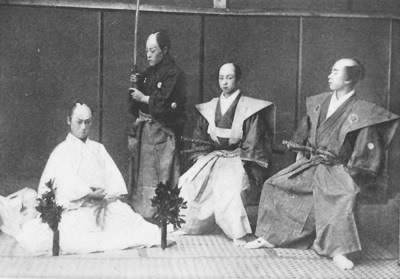
6 - Seppuku


Seppuku (Hara-Kiri) was a key part of bushido, the code of the samurai warriors; it was used by warriors to avoid falling into enemy hands, and to attenuate shame. Samurai could also be ordered by their daimyo (feudal lords) to commit seppuku. Later, disgraced warriors were sometimes allowed to commit seppuku rather than be executed in the normal manner. Since the main point of the act was to restore or protect one’s honor as a warrior, those who did not belong to the samurai caste were never ordered or expected to commit seppuku. Samurai women could only commit the act with permission.

A Samurai was bathed, dressed in white robes, fed his favorite meal, and when he was finished, his instrument was placed on his plate. Dressed ceremonially, with his sword placed in front of him and sometimes seated on special cloths, the warrior would prepare for death by writing a death poem. With his selected attendant (kaishakunin, his second) standing by, he would open his kimono (clothing), take up his tantō (knife) and plunge it into his abdomen, making a left-to-right cut. The kaishakunin would then perform daki-kubi, a cut in which the warrior was all but decapitated (a slight band of flesh is left attaching the head to the body).


7 - Concubinage


The photograph here shows a group of concubines standing behind their protectors (usually Eunuchs). Concubinage is the state of a woman or youth in an ongoing, quasi-matrimonial relationship with a man of higher social status. Typically, the man has an official wife in addition to one or more concubines. Concubines have limited rights of support from the man, and their offspring are publicly acknowledged as the man’s children, albeit of lower status than children born by the official wife or wives.

Historically, concubinage was frequently voluntary (by the girl and/or her family’s arrangement), as it provided a measure of economic security for the woman involved. Involuntary, or servile, concubinage sometimes involves sexual slavery of one member of the relationship, typically the woman.

8 - Eunuchs


First off, in case you are confused, the photograph above is of a male Eunich. A eunuch is a castrated man; the term usually refers to those castrated in order to perform a specific social function, as was common in many societies of the past. In ancient China castration was both a traditional punishment (until the Sui Dynasty) and a means of gaining employment in the Imperial service. At the end of the Ming Dynasty there were 70,000 eunuchs in the Imperial palace. The value of such employment—certain eunuchs gained immense power that may have superseded that of the prime ministers—was such that self-castration had to be made illegal. The number of eunuchs in Imperial employ had fallen to 470 in 1912, when their employment ceased
Eunuchs castrated before puberty were also valued and trained in several cultures for their exceptional voices, which retained a childlike and other-worldly flexibility and treble pitch. Such eunuchs were known as castrati. Unfortunately the choice had to be made at an age when the boy would not yet be able to consciously choose whether to sacrifice his sexual potency, and there was no guarantee that the voice would remain of musical excellence after the operation.

9 - Dueling


As practised from the 15th to 20th centuries in Western societies, a duel was a consensual fight between two people, with matched deadly weapons, in accordance with rules explicitly or implicitly agreed upon, over a point of honor, usually accompanied by a trusted representative (who might themselves fight), and in contravention of the law.

The duel usually developed out of the desire of one party (the challenger) to redress a perceived insult to his honor. The goal of the duel was not so much to kill the opponent as to gain “satisfaction,” i.e., to restore one’s honor by demonstrating a willingness to risk one’s life for it.

Duels could be fought with some sort of sword or, from the 18th Century on, with pistols. For this end special sets of duelling pistols were crafted for the wealthiest of noblemen. After the offence, whether real or imagined, the offended party would demand “satisfaction” from the offender, signalling this demand with an inescapably insulting gesture, such as throwing the glove before him, hence the phrase “throwing down the gauntlet”.

10 - Geisha


The full traditions of the Geisha have now been replaced with a modern system. Once Geisha were plentiful in number. In 1900s, there were over 25,000 geisha. In the early 1930s, there were 80,000 geisha. Most geisha were in Kyoto, the old capital city of Japan. Nowadays, there are less than 10,000 geisha left. In Tokyo, there are only 100 geisha left. However, true geisha are much more rare. Modern geisha are not bought from poor families and brought into the geisha house as children. Becoming a geisha is now entirely voluntary, and women who are not the children of geisha can now become geisha. However the training remains as rigourous as before. Young girls have to be very committed to learn the art of traditional Japanese dancing, singing, music, and much more.

Traditional Geisha did not offer the services of prostitution, though some modern ones are rumoured to.


Sabtu, 08 Oktober 2011

10 of the Best Mike (Michael) in History I know


“What’s in name that which we call a rose by any other name would smell as sweet”, wrote William Shakespeare in his immortal tragedy “Romeo and Juliet.” This dramatizes hints of negative spin on the significance of a name, although this is not what this top 10 list is all about. What I want to bring you instead is a moniker that over the ages has stood the test of time and, more importantly proven to be respected, most valuable, not to mention superlatively popular.

Michael, a Hebrew term which means “who is like God”, a name that boosts variations in a multitude of major languages around the world – from Irish to Swedish, German to Spanish.

Speaking of famous Mikes, here are ten (10) of the most famous and prominent in history. This is a subjective list, and admittedly you may have your own.

1 – Saint Michael, the Archangel

One of the seven angels in Hebrew tradition and feared by Satan as the leader of God’s army in the New Testament’s “Book of Revelations.” (Who did follow the Fallen TV Series *Guilty, I do…) the biblical account told of some angels turned against God in Heaven. They thus became the devils and demons. Archangel Michael led the good angels in a furious battle, beating the evil ones and throwing them down to earth as punishment. Michael has four positions – warrior against the devil and other demons, protector of righteous souls at the time of their deaths, transporter of soul for judgement, and champion of God’s people. In the Koran too, Michael is regarded as one of the principal angles in Islamic tradition and is known as the field commander of the army of God.


2 – Michael Fred Phelps, the Swimmer

He is without doubt one of the most famous athletes in the Olympic history, most especially at the Beijing Olympics where he hauled in seven world records in swimming. He has won 14 career Olympic gold medals, the most by any Olympian, and holds the record for the most gold’s won at a single Olympics with the eight he won at the 2008 Olympic Games – surpassing fellow American Mark Spitz’s total of seven at the 1972 Munich Games.


3 – Michael Kirk Douglas

The Hollywood is an actor and producer who have on numerous accolades, including Oscar awards, one for the Best Picture in 1979 as producer of the film “One Flew over the Cuckoo’s Nest” and the other for the Best Actor in 1987 for his role as a businessman Gordon Geko in the movie “Wall Street.” He is currently married to voluptuous Hollywood actress Catherine Zeta Jones.


4 – Michael Schumacher

Germany’s “god of Formula One (F1) Racing” is seven-time world champion and current advisor and occasional test driver for Team Ferrari. Official F1 website cited him as “statistically the greatest driver the sport has ever seen.” The only German to win F1 World championship, he has singlehandedly popularized the sport in Germany, and was voted the most popular driver among F1 fans in recent survey.


5 – Michael Jordan

Acclaimed as the greatest basketball player of all time, Jordan “flies” to dunk or lay the ball up – and was thus called “Air Jordan.” He is easily most recognizable name in sports and was instrumental in popularizing NBA around the world in 1980’s and 1990’s.


6 – Mikhail Servgeyevich Gorbachev

Only a few in politics reached the prominence that this Soviet leader achieved. He was the very last General Secretary of the Communist Party of the Soviet Union and head of state of the USSR, serving from1985 until its collapse in 1991. He initiated Glasnost and Perestroika, a plan for reconstruction and reforms in the former Soviet Republic.


7 – Michael Joseph Jackson

The king of pop is undoubtedly the most prolific men in the music industry. He debuted on the music scene at the age of 11 as the lead vocalist of the family band The Jackson 5. Starting his solo career in 1971 while still a member of the group, five of his albums have been some of the world’s best selling records – “Off the wall” (1979), “thriller” (1982), “Bad” (1987), “Dangerous” (1991), and “History” (1995).


8 – Michelangelo

One of the greatest artist of all time, he was an Italian renaissance sculptor who was also versatile as a painter, architect and engineer. Michelangelo di Lodovico Bounarroti Simoni is the best documented artist of the 6th century, with his famous masterpiece the Pieta, the David, Scenes from Genesis on the ceiling, as well as the last judgement on the altar wall, both Sistine Chapel in Rome; and, the architectural design for St. Peter’s Basilica dome.


9 – Miguel Lopez de Legazpi

Known as El Adelantado (The Governor) and El Viejo (The Elder), he was a Basque Spanish conquistador (Colonizer) who established one of the first European settlements in East Indies and Pacific Islands way back 1565. he is a history textbook subject here (Philippines) as the Spanish colonizer who made a blood compact on March 16, 1565 with a native Bohol Chieftain, Datu Sikatuna, as a sign of friendship, as well as establishing settlement in Manila on June 24,1571, ordering the construction of Intramuros, and proclaiming the town as the island’s capital as well as the seat of the Spanish government in East Indies.


10 – Michel Legrand

Michel (February 24, 1932 Paris, France) is a French musical composer, arranger, conductor, and pianist of Armenian Decent. He composed more than 200 film and television scores and several other musicals, and has made well over a hundred albums. He won 3 Oscars (out of 13 nominations) and five Grammys. His first album, “I love Paris,” became one of the best selling instrumental albums ever released. Amongst his best are “What are you doing the Rest of your Life?” “Watch what Happens,” “The Summer Knows” (theme from the 1971 movie “Summer of 42”), and the hit song “The Windmills of your Mind,” (theme from the 1968 film “The Thomas Crown Affair”).

Is it any wonder then that the name Michael has enjoyed massive following for over a century now? From it’s biblical roots to its association with world-famous achievers, it is simply spells magnificence and great success.

Stated crisply, Michael’s best! This is me, signing off. Ciao!

Kamis, 07 Juli 2011

10 of World's Most Populated Countries/Nations (UNFPA 2011)

World Population Day, which seeks to focus attention on the urgency and importance of population issues, was established by the Governing Council of the United Nations Development Programme in 1989. It was an outgrowth of the interest generated by the Day of Five Billion, which was observed on 11 July 1987. This year it marks the leadup to another milestone -- the World at 7 Billion.

Each year a number of UNFPA Country Offices and other organizations and institutions mark the day with a variety of activities to bring attention to population issues. UNFPA, which sponsors the observance, publishes posters and other advocacy materials for this purpose. 6,929,400,000 is the total approximation of world population as of July 7, 2011

Here's Top 10 of World's Most Populated Countries/Nations as of 2011.

1 - China

1,339,724,852 as of November 1, 2010
2 - India

1,210,193,422 as of March 1, 2011
3 - United States of America

311,705,000 as of July 7, 2011
4 - Indonesia

237,556,363 as of May 2010
5 - Brazil

190,732,694 as of August 1, 2010
6 - Pakistan

176,554,000 as of July 7, 2011
7 - Nigeria

176,554,000 as of 2010
8 - Bangladesh

150,863,000 as of July 7, 2011
9 - Russia

142,905,200 as of January 1, 2011
10 - Japan

127,950,000 as of June 1, 2011
  • Reference/Source: Wikipedia.org
  • Reference/Source: UNFPA
  • About

    UNFPA

    The United Nations Population Fund (UNFPA) in a UN organisation. The work of the UNFPA involves improving demographic statistics and assisting with poulation censuses and major national surveys; improving reproductive health, including national strategies, protocols, providing supplies and services, reproductive health, which expands out into areas such as prevention of sexually transmitted diseases, including HIV/AIDS; and addressing issues concerning the rights of particular population groups, principally women, adolescents and youth, and as relevant, also national minorities, internal migrants, the elderly and the handicapped. It is known recently for its worldwide campaign against obstetric fistula and female genital cutting. The UNFPA supports programs in more than 150 countries, territories and areas spread across four geographic regions: Arab States and Europe, Asia and the Pacific, Latin America and the Caribbean, and sub-Saharan Africa. Around three quarters of the staff work in the field. It is a member of the United Nations Development Group and part of its Executive Committee.

Rabu, 15 Juni 2011

10 of the Most Famous/Known Facts That Are Actually Wrong

Nothing beats a good dose of myth busting – it is one of our favorite pastimes here at the Always10. This top10 list is no exception. Following on from the very popular 10 of the Most Famous/Known Facts That Are Actually Wrong, we are presenting varied list of “facts” that most people believe which are, in fact, insincere talk. By the end of this list you should be ten facts smarter!

10 - The United States Lost the Vietnam War

While it is a fact that the country known as the Republic of South Vietnam no longer exists (having been absorbed by its Communist neighbor to its north) the truth is that its demise was not because the United States lost its seven-year long war there. In fact, by the time the country was overrun by the North Vietnamese in the spring of 1975, the United States had been out of Vietnam for nearly two years, its active involvement having concluded with the signing of the Paris Peace Accord in January, 1973. The only reason the war is considered a “loss” for America was because of its great cost (57,000 Americans killed) and its general unpopularity at home. It could be considered a political defeat, however, in that America was essentially so worn down by the conflict that it lost the will to come to South Vietnam’s defense when the North Vietnamese launched their invasion, thereby effectively surrendering that nation’s sovereignty to its Communist neighbor and giving the U.S. a black eye that took literally decades to recover from. However, it did not “lose” the war in the traditional respect in that it was defeated militarily by a superior foe. In fact, the Paris Accord gave the U.S. everything it wanted from North Vietnam, bringing the war to what could be considered a positive close. Who could have guessed the North Vietnamese would renege on the treaty just two years later?
9 - Charles Lindbergh was the First Man to Cross the Atlantic Ocean by Air

While “Lucky Lindy” became quite the hero when he made the first solo crossing of the Atlantic by air—a grueling 34 hour, 3,600 mile flight—he was not the first man to make the crossing by air. In fact, he was something like the 85th man to do so. The feat was actually first accomplished by a pair of British aviators, John Alcock and Arthur Brown, eight years earlier when they flew a British Vimy bomber from Newfoundland, Canada, to Ireland in June of 1919. It was also accomplished by the entire crew of the German-built and manned zeppelin, the U.S.S. Los Angeles in 1924, when they flew the monster ship to America as war reparations. And, of course, this doesn’t include the men who may have made it but didn’t survive, such as the French aviators Charles Nungesser and Francois Coli, who attempted the flight a mere three weeks before Lindbergh only to vanish somewhere between Paris and New York. (Many suggest, however, that they may have actually made it across, only to crash land in the uncharted forests of Newfoundland.) Lindbergh was, however, the first to make the flight solo, which is what made it such an accomplishment—especially considering that as there was no autopilot in that day, he was forced to remain awake the entire 34 hours of the flight. Talk about a bad flight!
8 - Columbus Was the First European to Discover North America

Though the idea that Columbus was the first European to discover America was held as sacrosanct for most of this countries’ history, it is becoming more commonly acknowledged today that he was probably not the first European to make the crossing. That honor generally goes to some Viking named Leif Erickson, who is believed by historians to have made his way from Scandinavia to Newfoundland a good five hundred years before ‘ol Chris was even born. In fact, the Vikings established villages in Greenland and on the Canadian coast, making them the first Europeans to colonize the New World as well. There is even evidence that the ancient Phoenicians—an eastern Mediterranean sea-going people who lived between 1550 and 300 BCE—might have accomplished the deed centuries earlier than that! Columbus was the first European to discover it in “modern” times, however, and the first to make the fact that a continent existed between Europe and Asia known to the “civilized” world. Another “fact” that needs revising is the one that imagines that Columbus set out on his quest in an effort to prove that the world was not flat. In fact, no one in 1492 believed the Earth was flat. What he wanted to prove is that it was possible to get from Europe to China by sailing west rather than east. In effect, he was looking for a shortcut and found a whole continent in the process.
7 - The Wright Brothers Were the First to Fly an Airplane

While the accomplishments of the gifted brothers from Dayton, Ohio cannot be diminished, the fact is there are a number of people who may have accomplished the feat of being the first to fly a manned, heavier-than-air craft in powered flight (as opposed to unpowered gliders, which had been flown for years before the Wright Brother’s first flight). Probably the best claim to having been the first is attributed to a German immigrant named Gustav Whitehead, who may have made one and possibly two flights in a small monoplane of his own design (and powered by a tiny motor also of his own design) as early as 1901—two full years before the Wright Brother’s tried it. Unfortunately, ol’ Gustav was a better mechanic and aviator than an archivist and he neglected to get any photos of the flight or document it (although there was a reporter from a local paper supposedly present—along with a handful of witnesses—who allegedly saw a second flight in 1902). Had he done so, he might have changed aviation history rather than remaining just a footnote. Whitehead wasn’t alone in the claim of being the first, however, as some maintain that Frenchman Clement Ader may have accomplished the task in 1897 in a frail-looking plane named the Avion III and another Frenchman, Felix du Temple, might have done it as early as 1874. Even a Russian Army Officer, Alexander Mozhaiski, supposedly accomplished the feat in a monster steam powered aircraft in 1884, so the list of candidates who may have beat the Wrights into the air is considerable. The Wrights, however, did come up with the first truly controllable aircraft, making the previous claims fairly moot in that none of those earlier attempts flew very far (usually a couple hundred of feet) or were controllable—with the possible exception of Whitehead. If only the man had thought to buy a camera.
6 - Alexander Graham Bell Invented the Telephone

Not to take anything away from the prolific Mr. Bell, but he didn’t come up with this modern little irritant on his own, but was one of several men who were working the idea at the same time. What he did do was be quicker on the draw than his competitors by getting to the patent office first. In fact, some historians maintain that another fellow named Elisha Gray was the first to create a working telephone, only to see Bell get all the credit for it. (And Gray has a pretty good claim according to many, with over 70 other patents—many communications oriented—to his credit. In fact, he may have missed out beating Bell to the Patent Office by a few hours!) Other names frequently mentioned for their work on early communication devices are Antonio Meucci, who was experimenting—quite successfully—with the electromagnetic telephone in 1857; Innocenzo Manzetti—who may have invented a “speaking telegraph” as early as 1865; and the German inventor Johann Philipp Reis, who was working on the idea during the 1860s. However, it was a Hungarian inventor named Tivadar Puskas who made the telephone useful by inventing the switchboard and with it something known as the “party line”, thereby making it possible for people to use Meucci’s/Manzetti’s/ Reis’/Gray’s/Bell’s invention in a practical way.
5 - Charles Darwin Was the First to Conceive of the Theory of Evolution

Like the telephone, no timely idea is birthed by a single mother. There is almost always more than one person working on a good idea at the same time, with one of them inevitably getting most of the credit in the end. This was not only true of inventions, but of scientific theories as well—in this case the (at the time) controversial theory of evolution. British naturalist Charles Darwin is usually credited with coming up with the concept, but the fact is there were any number of scientists and naturalists working on the thorny issue of how human beings got here (in a non-Biblical way). The foundation for the idea may have been laid down by the Greek philosopher and scientist Anaximander (610 BCE-546 BCE), who was the first to suggest that physical forces, rather than supernatural forces, create order in the universe. However, the basics for the modern theory of evolution were first articulated in 1745 by the French mathematician and philosopher Pierre Louis Maupertius. Additionally, Charles Darwin’s own grandfather, Erasmus Darwin, wrote of the idea as early as 1796. However, few men did as much for the theory as did the French naturalist Jean-Baptiste Lamarck, who came up with the first truly cohesive theory of evolution, in which he argued that there was a natural force that drove organisms up a ladder of complexity, and a second environmental force that adapted them to local environments through use and disuse of characteristics, differentiating them from other organisms—which was very close to Darwin’s concept of natural selection. Darwin’s greatest competitor, however, was the Englishman Alfred Wallace, who presented a very similar theory to Darwin’s to the prestigious Linnean Society in 1858 at the same time Darwin presented his. It was Darwin’s book, the Origin of the Species, however that made him world famous and is why to this very day it is Charles Darwin who gets all the credit (and, from some people’s perspective, all the blame) for the modern theory of evolution.
4 - JFK’s Assassination was Part of a Larger Conspiracy

Though the idea that President Kennedy’s assassination was part of a larger conspiracy is actually an urban legend, the fact that it is believed by such a large percentage of the population—by some estimates, as much as 70%–makes it to many people’s way of thinking, a cold and hard fact. The idea that a lone nut job like Lee Harvey Oswald could have pulled off what was effectively the murder of the century without help is too much for some to accept, leading to nearly fifty years of all manner of conspiracy theories. These theories are generally divided into two groups: one which believes that Oswald was “set up” by someone—the CIA and the Mafia being the main suspects—and the other being that while he was in on the killing, he had help (and, in fact, may have been just one of several gunmen that day). Oswald’s death at the hands of a Dallas nightclub owner named Jack Ruby a couple of days later—in the basement of the Dallas Police Headquarters no less—seals the deal for most people, making the JFK conspiracy one of the most successful and lucrative cottage industries in America to this very day. Of course, no amount of evidence demonstrating that Oswald indeed possessed the means, motive, and opportunity to carry out the most heinous crime of the twentieth century all by himself or the lack of even a shred of solid evidence to suggest otherwise does little to dissuade the truly convinced, meaning that the idea that JFK’s death was the product of some massive CIA/Cuban/Russian/Mafia/Vice President Johnson plot a “fact” for millions that is unlikely to ever die.
3 - We Only Use 10% of Our Brain

This “fact” has been so often repeated that most people don’t even question it anymore (thereby demonstrating that it may be true). However, even a moment’s consideration should demonstrate what a fallacy this idea is. The brain is a magnificent organ that does everything from making sure you don’t forget to blink once in a while to helping you remember where you put the car keys. To use only 10% of it, then, would render it little more than vestigial organ which, while making getting shot in the head more an annoyance than a catastrophe, is obviously nonsense. The fact is that despite evidence to the contrary, everyone uses 100% of their brain all the time; it’s just that different parts of it do different things. While it is possible that only 10% of the brain is used for the higher brain functions such as cognitive thought, reasoning, and memory, that doesn’t mean the rest of it is sitting idle. It’s just that those other parts are busy doing all sorts of other things like keeping your heart pumping and making sense of the millions of bits of data being sent to it by the bodies’ sensing organs. In reality, science is only just beginning to understand the complexities of the human brain and its capacity for doing all the stuff it does on a daily basis, making it more of a mystery than ever. The prospect that many of us don’t use our brain to its fullest capacity, however, may be worth considering, but that is a subject for another day.
2 - Roosevelt’s New Deal Ended the Depression

It has been taught for over seventy years that FDR was responsible for ending the Great Depression of the thirties by enacting a dearth of government spending programs collectively known as the “New Deal”. In fact, the success of FDR’s massive spending programs is often pointed to by advocates of big government today as evidence that massive infusions of federal spending is the best hope for the poor, and has been the impetus behind some of the largest federal entitlement programs in history, from Medicare and Medicaid to welfare and food stamps. The only problem is that the New Deal was, in many ways, the Big Bust in that it did little to help the country recover from the Great Depression and, in fact, may have even delayed the recovery by years by raising corporate tax rates to such a level that it flat-lined business hiring for years. It was the Second World War that finally put most Americans to work which, combined with a reduction in tax rates in 1946, led to one of this countries’ greatest boom periods. Don’t believe it? Then just compare how long it took the United States to recover from the Depression compared to the countries of Europe which also saw a huge downturn in the early 1930s; England, France, and even Germany had put the worst of the depression behind them by 1935 while America continued to lumber on for years with high unemployment rates and a sluggish GNP. While no one can fault FDR for his noble intentions in wanting to ease the suffering of many people in this country, the New Deal actually demonstrated that the government that does the least to “fix” the problem actually does the most good by simply letting economic and financial forces heal themselves.
1 - Thomas Edison Invented the Light Bulb

Like so many great inventions in history, this one too must fall into the “I wonder who really invented it first” category. Though Edison is given the credit, work on an incandescent light bulb had been going on long before ‘ol Tom wrapped his prodigious brain around the problem. As far back as 1802 a guy named Humphrey Davy passed an electrical current through a thin strip of platinum to create the first short-lived but impressive light show and after that the race was on to see who could be the first to find a filament that could last more than, say, five minutes. It wouldn’t be until 1841 when another Englishman, Frederick de Moleyns, would patent the first incandescent lamp using platinum wires in a vacuum as a filament. (However, the setup proved to be too expensive to be commercially viable, which is why no one speaks reverently today of de Moleyn’s remarkable invention.) After that, it was just a matter of time until someone stumbled upon a material that would be both economical and long-lasting, both of which would be required to make the light bulb useful. While Edison’s team did come up with a carbonized bamboo filament that could last over 1200 hours, thereby making the light bulb practical, another British physicist (clever folks, those Brits) by the name of Joseph Swan actually beat Edison when he came up with something that pretty closely resembled Edison’s later bulb by a couple of years. He had even begun installing the things in pubs around London while ‘ol Tom was still seeing if human hair would work as a filament. However, for some reason, history has not been kind to Mr. Swan and he remains largely forgotten (which probably explains why he could be frequently found afterwards drinking away his sorrows in one of London’s many well-lit pubs).
Honorable Mentions: General Custer (was not a General at Little Big Horn but a lowly Lieutenant Colonel. He had been a General during the Civil War but was reduced in rank afterwards, which is the reason for the confusion); George Washington’s Wooden Teeth (they were not wooden at all but made from gold, ivory, lead, and human and animal teeth!); George Washington and the Cherry Tree (Never happened); and The Emancipation Proclamation Ending Slavery (which did not end slavery in the North but applied only to those slaves living in Confederate States. There were thousands of slaves still residing in northern states at the time, though most were domestic servants or slaves by choice—usually for personal or economic reasons—at the time.)

Minggu, 22 Mei 2011

10 of World's Most Corrupt Nations/Countries 2010

The Transparency International Corruption Perceptions Index defines corruption as the abuse of public office for private gain, and measures the degree to which corruption is perceived to exist among a country's public officials and politicians.

Political corruption is the use of legislated powers by government officials for illegitimate private gain. Misuse of government power for other purposes, such as repression of political opponents and general police brutality, is not considered political corruption. Neither are illegal acts by private persons or corporations not directly involved with the government. An illegal act by an officeholder constitutes political corruption only if the act is directly related to their official duties.

Forms of corruption vary, but include bribery, extortion, cronyism, nepotism, patronage, graft, and embezzlement. While corruption may facilitate criminal enterprise such as drug trafficking, money laundering, and human trafficking, it is not restricted to these activities.

Here is the ranking of 10 Most Corrupt Nations in 2010 according to Transparency.org:

1 - Somalia

Corruption Score: 1.1


2 - Myanmar

Corruption Score: 1.4


3 - Afghanistan

Corruption Score: 1.4


4 - Iraq

Corruption Score: 1.5


5 - Uzbekistan

Corruption Score: 1.6


6 - Turkmenistan

Corruption Score: 1.6


7 - Sudan

Corruption Score: 1.6


8 - Chad

Corruption Score: 1.7


9 - Burundi

Corruption Score: 1.8


10 - Equatorial Guinea

Corruption Score: 1.9


Notable among decliners over the past year are some of the countries most affected by a financial crisis precipitated by transparency and integrity deficits. Among those improving in the past year, the general absence of OECD states underlines the fact that all nations need to bolster their good governance mechanisms.

The message is clear: across the globe, transparency and accountability are critical to restoring trust and turning back the tide of corruption. Without them, global policy solutions to many global crises are at risk.

Sabtu, 21 Mei 2011

10 of FBI's Most Wanted Fugitives

The following contains current and historical information for internal and external distribution. This information is based on FBI records and is updated by the Investigative Publicity and Public Affairs Unit, Office of Public Affairs.

The FBI's "Ten Most Wanted Fugitives" list has been in existence since March 14, 1950. A reporter for the International News Service (the predecessor to United Press International) asked the Bureau for the names and descriptions of the "toughest guys" the Bureau would like to capture. The resulting story generated so much publicity and had so much appeal that late FBI Director J. Edgar Hoover implemented the "Ten Most Wanted Fugitives" program. The first person to be placed on the list was Thomas James Holden, wanted for the murder of his wife, her brother, and her stepbrother.

Since its inception, 494 fugitives have been on the "Top Ten" list, and 464 have been apprehended or located. Some interesting facts about the program are:

152 fugitives have been captured/located as a result of citizen cooperation.
Two fugitives were apprehended as a result of visitors on an FBI tour.
The shortest amount of time spent on the "Top Ten" list was two hours, by Billy Austin Bryant in 1969.
The longest amount of time spent on the “Top Ten” list is over 26 years by Victor Manuel Gerena.
Nine fugitives were arrested prior to publication and release, but are still considered as officially on the list.
The oldest person to be placed on the list was 69-year-old James J. Bulger, who was added in August of 1999.
This program relies heavily on the assistance of citizens and the media. Publicity from coast to coast and around the world is important. Public-spirited television programming, such as FOX network's America's Most Wanted: America Fights Back, provides nationwide publicity.

The FBI is offering rewards for information leading to the apprehension of the Ten Most Wanted Fugitives. Select the images of suspects to display more information.
GLEN STEWART GODWIN
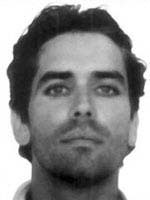
Unlawful Flight to Avoid Confinement - Murder, Escape
REWARD: The FBI is offering a reward of up to $100,000 for information leading directly to the arrest of Glen Stewart Godwin.
Glen Stewart Godwin is being sought for his 1987 escape from Folsom State Prison in California, where he was serving a lengthy sentence for murder. Later in 1987, Godwin was arrested for drug trafficking in Puerta Vallarta, Mexico. After being convicted, he was sent to a prison in Guadalajara. In April of 1991, Godwin allegedly murdered a fellow inmate and then escaped five months later.
Godwin is fluent in Spanish and may be traveling throughout Central and South America, and Mexico. He is thought to be involved in narcotics distribution.
ROBERT WILLIAM FISHER

Unlawful Flight to Avoid Prosecution - First Degree Murder (3 Counts), Arson of an Occupied Structure

REWARD: The FBI is offering a reward of up to $100,000 for information leading directly to the arrest of Robert William Fisher.
Robert William Fisher is wanted for allegedly killing his wife and two young children and then blowing up the house in which they all lived in Scottsdale, Arizona in April of 2001.
Fisher is physically fit and is an avid outdoorsman, hunter, and fisherman. He has a noticeable gold crown on his upper left first bicuspid tooth. He may walk with an exaggerated erect posture and his chest pushed out due to a lower back injury. Fisher is known to chew tobacco heavily. He has ties to New Mexico and Florida. Fisher is believed to be in possession of several weapons, including a high-powered rifle
EDUARDO RAVELO
Engaging in the Affairs of an Enterprise, Through a Pattern of Racketeering Activities; Conspiracy to Conduct the Affairs of an Enterprise, Through a Pattern of Racketeering Activities; Conspiracy to Launder Monetary Instruments; Conspiracy to Possess Heroin, Cocaine and Marijuana with the Intent to Distribute
REWARD: The FBI is offering a reward of up to $100,000 for information leading directly to the arrest of Eduardo Ravelo.
Eduardo Ravelo was indicted in Texas in 2008 for his involvement in racketeering activities, conspiracy to launder monetary instruments, and conspiracy to possess heroin, cocaine and marijuana with the intent to distribute. His alleged criminal activities began in 2003.
Ravelo is known to be a Captain (Capo) within the Barrio Azteca criminal enterprise and is allegedly responsible for issuing orders to the Barrio Azteca members residing in Juarez, Mexico. Allegedly, Ravelo and the Barrio Azteca members act as "hitmen" for the Vicente Carrillo Fuentes Drug Trafficking Organization and are responsible for numerous murders. Ravelo has ties to Mexico and El Paso, Texas. He may have had plastic surgery and altered his fingerprints
ALEXIS FLORES
Unlawful Flight to Avoid Prosecution - Kidnapping, Murder

REWARD: The FBI is offering a reward of up to $100,000 for information leading directly to the arrest of Alexis Flores.
Alexis Flores is wanted for his alleged involvement in the kidnapping and murder of a five-year-old girl in Philadelphia, Pennsylvania. The girl was reported missing in late July of 2000, and later found strangled to death in a nearby apartment in early August of 2000.
Flores has ties to Honduras.


SEMION MOGILEVICH
Fraud by Wire; RICO Conspiracy; Mail Fraud; Money Laundering Conspiracy; Money Laundering; Aiding and Abetting; Securities Fraud; Filing False Registration With the SEC; False Filings With the SEC; Falsification of Books and Records
REWARD: The FBI is offering a reward of up to $100,000 for information leading directly to the arrest of Semion Mogilevich.
Semion Mogilevich is wanted for his alleged participation in a multi-million dollar scheme to defraud thousands of investors in the stock of a public company incorporated in Canada, but headquartered in Newtown, Bucks County, Pennsylvania, between 1993 and 1998. The scheme to defraud collapsed in 1998, after thousands of investors lost in excess of 150 million U.S. dollars, and Mogilevich, thought to have allegedly funded and authorized the scheme, was indicted in April of 2003.

Mogilevich may wear facial hair to include a moustache. He is known to be a heavy smoker. Mogilevich has his primary residence in Moscow, Russia. He is known to utilize a Russian passport, but may also possess Israeli, Ukrainian, and Greek passports.
JOE LUIS SAENZ
Unlawful Flight to Avoid Prosecution - Murder, Kidnapping, Rape, Parole Violation
REWARD: The FBI is offering a reward of up to $100,000 for information leading directly to the arrest of Joe Luis Saenz.
On July 25, 1998, Joe Luis Saenz allegedly shot and killed two rival gang members in Los Angeles. Less than two weeks later, on August 5, 1998, Saenz allegedly kidnapped, raped, and murdered his girlfriend. Saenz allegedly murdered a fourth victim in October of 2008 in Los Angeles County.
Saenz is believed to work for a Mexican drug cartel, and is known to travel between the United States and Mexico. He may have removed his tattoos with a laser. He has reportedly made previous statements indicating plans to kill a police officer upon his arrest. He is believed to always carry a weapon.
USAMA BIN LADEN
Murder of U.S. Nationals Outside the United States; Conspiracy to Murder U.S. Nationals Outside the United States; Attack on a Federal Facility Resulting in Death
REWARD: The Rewards For Justice Program, United States Department of State, is offering a reward of up to $25 million for information leading directly to the apprehension or conviction of Usama Bin Laden. An additional $2 million is being offered through a program developed and funded by the Airline Pilots Association and the Air Transport Association.
Usama Bin Laden is wanted in connection with the August 7, 1998, bombings of the United States Embassies in Dar es Salaam, Tanzania, and Nairobi, Kenya. These attacks killed over 200 people. In addition, Bin Laden is a suspect in other terrorist attacks throughout the world.
Bin Laden is the leader of a terrorist organization known as Al-Qaeda, "The Base". He is left-handed and walks with a cane.


(LAST UPDATE May 3, 2011)
On May 1, 2011, in Washington, D.C. (May 2, Pakistan Standard Time), U.S. President Barack Obama announced that Osama bin Laden had been killed by "a small team of Americans" acting under Obama's direct orders, in a covert operation in Abbottabad, Pakistan, about 50 km (31 mi) north of Islamabad. It had been believed by some that bin Laden was hiding near the border between Afghanistan and Pakistan's Federally Administered Tribal Areas, but he was actually found 100 miles away in a million-dollar, three-story mansion in Abbottabad[154] at 34°10′9″N 73°14′33″E. Bin Laden's mansion was located .75 miles (1.21 km) southwest of the Pakistan Military Academy (Pakistan's "West Point"). Google Earth maps show that the compound was not present in 2001, but was present on images taken in 2005.
According to U.S. officials, a team of 20–25 U.S. Navy SEALs from the Naval Special Warfare Development Group (SEAL Team Six), under the command of the Joint Special Operations Command and working with the CIA stormed bin Laden's compound in two helicopters. Bin Laden, three other men, and a woman were killed in a firefight in which U.S. forces did not experience any injuries or casualties. In his broadcast announcement, President Obama said that U.S. forces "took care to avoid civilian casualties." Among the others killed were one of bin Laden's sons, a man described as a courier, and the courier's brother. Four years of surveillance of the courier led to the intelligence which made the raid possible. It was reported that the courier was the owner of the compound where the assault took place. John Brennan, the White House anti-terrorism chief, said that the woman that was killed was one of bin Laden's four wives and was being used as a human shield at the time. Two other women, who were also used as shields, were injured during the raid. According to one U.S. official, the attack was carried out without the knowledge or consent of Pakistani authorities. In contrast, agents of the Pakistani Inter-Services Intelligence agency (ISI) said it was a joint operation.
DNA from bin Laden's body, compared with DNA samples on record from his dead sister's brain confirmed bin Laden's identity the following day, according to assertions to ABC News by unnamed sources. The 193 cm long body was recovered by the U.S. military, and was in its custody until his body was buried in the North Arabian Sea from the USS Carl Vinson according to Islamic traditions. One U.S. official stated that "finding a country willing to accept the remains of the world's most wanted terrorist would have been difficult." MSNBC reported, "There also was speculation about worry that a grave site could have become a rallying point for militants."
The U.S. State Department issued a "worldwide caution" for Americans following bin Laden's death, and U.S diplomatic facilities everywhere were placed on high alert, a senior U.S official said. Crowds gathered outside the White House and in New York City's Times Square to celebrate bin Laden's death. In Pakistan, some people were dismayed that Pakistan has lost its sovereignty.
JASON DEREK BROWN
Unlawful Flight to Avoid Prosecution - First Degree Murder, Armed Robbery
REWARD: The FBI is offering a reward of up to $100,000 for information leading directly to the arrest of Jason Derek Brown.
Jason Derek Brown is wanted for murder and armed robbery in Phoenix, Arizona. During November of 2004, Brown allegedly shot and killed an armored car guard outside a movie theater and then fled with the money.
Brown speaks fluent French and has a Masters Degree in International Business. He is an avid golfer, snowboarder, skier, and dirt biker. Brown enjoys being the center of attention and has been known to frequent nightclubs where he enjoys showing off his high-priced vehicles, boats, and other toys. He has been described as possibly having bisexual tendencies.
Brown has ties to California, Arizona, and Utah. In the past, he has traveled to France and Mexico. Additionally, he may be in the possession of a Glock 9mm and a .45 caliber handgun.
JAMES J. BULGER
Racketeering Influenced and Corrupt Organizations (RICO) - Murder (19 Counts), Conspiracy to Commit Murder, Conspiracy to Commit Extortion, Narcotics Distribution, Conspiracy to Commit Money Laundering; Extortion; Money Laundering
REWARD: The FBI is offering a $2,000,000 reward for information leading directly to the arrest of James J. Bulger.
James J. Bulger is being sought for his role in numerous murders committed from the early 1970s through the mid-1980s in connection with his leadership of an organized crime group that allegedly controlled extortion, drug deals, and other illegal activities in the Boston, Massachusetts, area. He has a violent temper and is known to carry a knife at all times.
Bulger is an avid reader with an interest in history. He is known to frequent libraries and historic sites. Bulger may be taking heart medication. He maintains his physical fitness by walking on beaches and in parks with his female companion, Catherine Elizabeth Greig. Bulger and Greig love animals. Bulger has been known to alter his appearance through the use of disguises. He has traveled extensively throughout the United States, Europe, Canada, and Mexico.
VICTOR MANUEL GERENA

Bank Robbery; Unlawful Flight to Avoid Prosecution - Armed Robbery; Theft From Interstate Shipment

REWARD: The FBI is offering a reward of up to $1 million for information leading directly to the arrest of Victor Manuel Gerena.
Victor Manuel Gerena is being sought in connection with the armed robbery of approximately $7 million from a security company in Connecticut in 1983. He allegedly took two security employees hostage at gunpoint and then handcuffed, bound and injected them with an unknown substance in order to further disable them.

The official FBI Ten Most Wanted Fugitives list is maintained on the FBI website. This information may be copied and distributed, however, any unauthorized alteration of any portion of the FBI's Ten Most Wanted Fugitives posters is a violation of federal law (18 U.S.C., Section 709). Persons who make or reproduce these alterations are subject to prosecution and, if convicted, shall be fined or imprisoned for not more than one year, or both.