Tampilkan postingan dengan label Business. Tampilkan semua postingan

Minggu, 22 Mei 2011

Top 10 of Wold's Billionaires 2011

Here is the Forbes List 2011 Billionaires – Top 10:
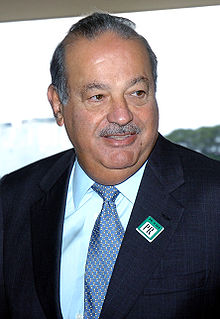
1. Carlos Slim (Mexico) – $74 billion, telecommunications
Carlos Slim Helú (Spanish pronunciation: [ˈkaɾlos esˈlim eˈlu]; born January 28, 1940) is a Mexican business magnate and philanthropist who has at various times been noted as the richest person in the world. He is the chairman and CEO of telecommunications companies Telmex and América Móvil and has extensive holdings in other Mexican companies through his conglomerate, Grupo Carso SAB, as well as business interests elsewhere in the world.
América Móvil, which at 2010 was Latin America’s largest mobile-phone carrier, accounted for around US$49 billion of his wealth by the end of 2010. His corporate holdings at February 2011 have been estimated at US$74 billion and from these estimates he is the wealthiest person in the world.

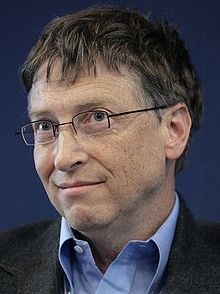
2. Bill Gates (USA) – $56 billion, Microsoft
William Henry "Bill" Gates III, (born October 28, 1955) is an American business magnate, philanthropist, author and is chairman of Microsoft, the software company he founded with Paul Allen. He is consistently ranked among the world's wealthiest people and was the wealthiest overall from 1995 to 2009, excluding 2008, when he was ranked third. During his career at Microsoft, Gates held the positions of CEO and chief software architect, and remains the largest individual shareholder with more than 8 percent of the common stock. He has also authored or co-authored several books.
Gates is one of the best-known entrepreneurs of the personal computer revolution. Although he is admired by many, a number of industry insiders criticize his business tactics, which they consider anti-competitive, an opinion which has in some cases been upheld by the courts. In the later stages of his career, Gates has pursued a number of philanthropic endeavors, donating large amounts of money to various charitable organizations and scientific research programs through the Bill & Melinda Gates Foundation, established in 2000.
Bill Gates stepped down as chief executive officer of Microsoft in January 2000. He remained as chairman and created the position of chief software architect. In June 2006, Gates announced that he would be transitioning from full-time work at Microsoft to part-time work and full-time work at the Bill & Melinda Gates Foundation. He gradually transferred his duties to Ray Ozzie, chief software architect and Craig Mundie, chief research and strategy officer. Gates' last full-time day at Microsoft was June 27, 2008. He remains at Microsoft as non-executive chairman.

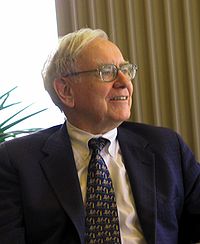
3. Warren Buffett (USA) – $50 billion, Berkshire Hathaway
Warren Edward Buffett (pronounced /ˈbʌfɨt/; born August 30, 1930) is an American investor, industrialist and philanthropist. He is widely regarded as one of the most successful investors in the world. Often called the "legendary investor, Warren Buffett", he is the primary shareholder, chairman and CEO of Berkshire Hathaway. He is consistently ranked among the world's wealthiest people. He was ranked as the world's wealthiest person in 2008 and is the third wealthiest person in the world as of 2011.
Buffett is called the "Oracle of Omaha" or the "Sage of Omaha" and is noted for his adherence to the value investing philosophy and for his personal frugality despite his immense wealth. Buffett is also a notable philanthropist, having pledged to give away 99 percent of his fortune to philanthropic causes, primarily via the Gates Foundation. He also serves as a member of the board of trustees at Grinnell College.

4. Bernard Arnault (France) – $41 billion, LVMH
Bernard Arnault (born 5 March 1949) is a French businessman. He is the founder, chairman, and CEO of LVMH, a large luxury goods conglomerate consisting of over fifty luxury brands, including Louis Vuitton, Dior, and Fendi. According to Forbes Magazine, Arnault is the world's 4th and Europe's richest person, with a 2011 net worth of US$41 billion.


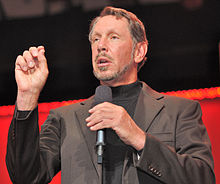
5. Larry Ellison (USA) – $39.5 billion, Oracle Corp
Lawrence Joseph "Larry" Ellison (born August 17, 1944) is an American business magnate, co-founder and chief executive officer of Oracle Corporation, a major enterprise software company. As of 2011 he is the fifth richest person in the world, with a personal wealth of $39.5 billion.


6. Lakshmi Mittal (India) – $31.1 billion, steel
Lakshmi Narayan Mittal (Hindi: लक्ष्मी मित्तल; born 15 June 1950) is an Indian steel magnate. He is the chairman and chief executive officer of ArcelorMittal, the world’s largest steelmaking company.
Mittal is the second richest man in Europe and is presently the sixth richest in the world with a personal wealth of US$31.1 billion or £23.8 billion.He is the 44th most powerful person of the 68 most powerful people in the world. One out of 5 cars in the world is made up of the steel materials of his steel empire. His daughter Vanisha Mittal's marriage was the most expensive in the recorded history of the world.
He is a independent director of Goldman Sachs, member of the Board of Directors of European Aeronautic Defence and Space Company, World Steel Association, Foreign Investment Council in Kazakhstan, the International Investment Council in South Africa, the Investors' Council to the Cabinet of Ministers of Ukraine, the World Economic Forum’s International Business Council, the World Steel Association's Executive Committee, the Presidential International Advisory Board of Mozambique and the International Iron and Steel Institute’s Executive Committee.
He also presently serves as a board council member of the Prime Minister of India's Global Advisory Council of Overseas Indians. and members in the Advisory Board of the Kellogg School of Management, Executive Board at Indian School of Business and St. Xavier's College, Calcutta Alumni Association, London Chapter.
In 2006, Financial Times named him "Person of the Year". In 2007, Time magazine included him in their "100 most influential persons in the world".
7. Armancio Ortega (Spain) – $31 billion, retail
Amancio Ortega Gaona (born March 28, 1936) is a Spanish fashion entrepreneur. He is the founder, along with his then-wife Rosalía Mera, and chairman of the Inditex Group. He is ranked by Forbes as Spain's richest man; Europe's second richest man; and the seventh richest man in the world in 2011. He currently lives with his second wife in a discreet apartment building in the centre of A Coruña.
Ortega arrived at A Coruña, Spain, at the age of 14, due to the job of his father, a railway worker. Starting as a gofer in various shirt stores in A Coruña, Galicia, in 1972 he founded Confecciones Goa (his initials in reverse), which made bathrobes. In 1975 he opened the first store in what would grow into the enormously popular chain of fashion stores called Zara. He owns 59.29% of the Inditex group (Industrias de Diseño Textil Sociedad Anónima) which includes the brands Zara, Massimo Dutti, Oysho, Zara Home, Kiddy's Class, Tempe, Stradivarius, Pull and Bear/Often and Bershka and has more than 14,000 employees.
Ortega keeps a very low profile and there are practically no photographs of him (except from one photo published at the Inditex website). He refuses to wear a tie, and likes to dress in blue jeans and T-shirts. He is said to take a very active part in the production and design process in the company.
When he made a public appearance in 2000 - as part of the warm-up prior to floating his company on the stock market in 2001 - it made headlines in the Spanish financial press. However, he has never given an interview, and his secrecy has led to the publication of books such as Amancio Ortega: DE CERO A ZARA (From Zero to Zara).
Ortega, announced his imminent retirement from the fast-fashion giant Inditex, parent company of the Zara chain, stating that he will ask Inditex vice-president and CEO Pablo Isla to take his place at the helm of the textile empire.

8. Eike Batista (Brazil) – $30 billion, mining, oil
Eike Fuhrken Batista, more commonly Eike Batista or simply Eike (Governador Valadares, November 3, 1957), is a Brazilian business baron. He has founded companies in different business sectors, mainly in mining. He is the son of Eliezer Batista da Silva, a longtime head of mining company Vale. As of March 2011, he is the eighth richest person in the world.


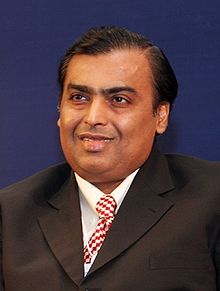
9. Mukesh Ambani (India) – $27 billion, petrochemicals, oil and gas
Mukesh Dhirubhai Ambani (born on 19 April 1957) is an Indian business magnate is the current chairman and managing director of Reliance Industries, the largest private sector enterprise in India, a Fortune 500 company, and one of the largest private sector conglomerates in the world. His personal stake in Reliance Industries is 48%.
He is a member of the board of director of Bank of America Corporation and a present member of the international advisory board of Council on Foreign Relations.
In 2010, he was named among the most powerful people in the world by Forbes in its list of "68 people who matter most" As of 2011, he is the second richest man in Asia[11] and the ninth richest man in the world with a personal wealth of US$27 billion. In 2007, a strong rally in the Indian stock market and the appreciation of the Indian rupee boosted the market capitalisation of Reliance group companies, briefly making him the world’s richest man. According to Forbes Magazine forecasts, he is expected to regain the title of the richest man in the world in 2014
10. Christy Walton (USA) – $26.5 billion, Wal-Mart
Christy Ruth Walton (born 1955) is the widow of John T. Walton, who was a son of Sam Walton, the founder of Wal-Mart. After John's death in June 2005, she inherited his fortune of $15.7 billion.
As of 2011, she is the 4th richest person in the United States according to Forbes Magazine and the 10th richest person in the world. As of March 2011, she had an estimated net worth of US$ 26.5 billion, the bulk of which comes from her shares in Wal-Mart, but also from First Solar, in which her late husband invested. She is currently the richest woman in the world.

She currently resides in Jackson, Wyoming and has one son, Lukas.

Senin, 02 Mei 2011

Top 10 Petroleum Producing Countries

Here are the top 10 oil producer countries and with Total oil production( millions of barrels per day ) on 2006

1. Saudi Arabia (10.72 millions of barrels per day)

Saudi Arabia has the world's largest oil reserves and is the world's largest oil exporter. Oil accounts for more than 90% of exports and nearly 75% of government revenues, facilitating the creation of a welfare state.
2. Russia (9.67 millions of barrels per day)

The country has the world's largest natural gas reserves, the 8th largest oil reserves, and the second largest coal reserves. Russia is the world's leading natural gas exporter and leading natural gas producer, while also the second largest oil exporter and largest oil producer, though Russia interchanges the latter status with Saudi Arabia from time to time. On January 1, 2011, Russia said it had begun scheduled oil shipments to China, with the plan to increase the rate up to 300,000 barrels per day in 2011.
3. United States (8.37 millions of barrels per day)

The United States is the third largest producer of oil in the world, as well as its largest importer.
4. Iran (4.12 millions of barrels per day)

Oil reserves in Iran, according to its government, rank third largest in the world at approximately 150 billion barrels (24×109 m3) as of 2007, although it ranks second if Canadian reserves of unconventional oil are excluded.[1] This is roughly 10% of the world's total proven petroleum reserves. Iran is the world's fourth largest oil producer and is OPEC's second-largest producer after Saudi Arabia. As of 2009 it was producing an estimated 4.172 million barrels per day (663.3×10³ m3/d) of crude oil. At 2006 rates of production, Iran's oil reserves would last 98 years if no new oil was found.
Iranian production peaked at 6 million barrels per day (950×103 m3/d) in 1974, but it has been unable to produce at that rate since the 1979 Iranian Revolution due to a combination of political unrest, war with Iraq, limited investment, US sanctions, and a high rate of natural decline.Iran's mature oil fields are in need of enhanced oil recovery (EOR) techniques such as gas injection to maintain production,which is declining at an annual rate of approximately 8% onshore and 10% offshore. With current technology it is only possible to extract 20% to 25% of the oil in place from Iran’s fractured carbonate reservoirs, 10% less than the world average. It is estimated that 400,000-700,000 bbl/d of crude production is lost annually due to declines in the mature oil fields.
Iran consumed 1.6 million barrels per day (250×103 m3/d) of its own oil as of 2006. Domestic consumption is increasing due to a growing population and large government subsidies on gasoline, which reduces the amount of oil available for export and contributes to a large government budget deficit. Due to a lack of refinery capacity, Iran is the second biggest gasoline importer in the world after the United States. High oil prices in recent years have enabled Iran to amass nearly $60 billion in foreign exchange reserves, but have not helped solve economic problems such as high unemployment and inflation.
According to NIOC, Iran recoverable liquid hydrocarbon reserves at the end of 2006 was 138,4 billion barrels.
5. Mexico(3.71 millions of barrels per day)

The petroleum industry in Mexico makes it the fifth largest producer of oil in the world and the tenth largest in terms of net export as of 2007. It is the second largest oil producer in the Western Hemisphere behind only the United States and just ahead of Canada. However, Mexico is not a member of OPEC or any petroleum production related organizations.
The oil sector is crucial to the Mexican economy; while its importance has been reduced in recent years, oil revenues generate over 10% of Mexico's export earnings.
6. China (3.84 millions of barrels per day)

China has been endeavoring to sign international agreements and secure such supplies; its energy security involves the internal and foreign energy policy of China. Currently, China's energy portfolio consists mainly of domestic coal, oil and gas from domestic and foreign sources, and small quantities of uranium. China has also created a strategic petroleum reserve, to secure emergency supplies of oil for temporary price and supply disruptions. Chinese policy focuses on diversification to reduce oil imports, which rely almost exclusively on producers in the Middle East.
7. Canada(3.23 millions of barrels per day)

As of 2005, Canada's total oil reserves including both conventional and unconventional oil, approximately 180 billion barrels (29 km³), puts Canada in second place (Saudi Arabia has the largest reserves), and ranks ninth in the production of crude oil the world over, approximately 2.7 million barrels (430,000 m³) of crude oil a day, and 6.4 trillion cubic feet (180 km³) of natural gas per year. Canada also has the largest oil sands reserves (its offshore reserves have just begun to be tapped). Its proximity to the United States of America makes Canada a significant entry point to one of the world's largest fuel-driven industrialized markets.
8. United Arab Emirates (2.94 millions of barrels per day)

9. Venezuela (2.81 millions of barrels per day)

Venezuela has some of the largest oil and natural gas reserves in the world, and consistently ranks among the top ten crude oil producers in the world. The country's main petroleum deposits are located around and beneath Lake Maracaibo, the Gulf of Venezuela (both in Zulia), and in the Orinoco River basin (eastern Venezuela), where the country's largest reserve is located. Besides the largest conventional oil reserves and the second-largest natural gas reserves in the Western Hemisphere, Venezuela has non-conventional oil deposits (extra-heavy crude oil, bitumen and tar sands) approximately equal to the world's reserves of conventional oil.
10. Norway (2.79 millions of barrels per day)

Selasa, 29 Maret 2011

10 of the Best Banks (International Banks and Finance)


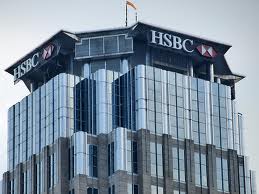
HSBC remained the biggest bank brand for the third year in a row with its brand value rising 12% to $28,472 million.


This must have been a relief to the bank that saw its brand value erode by 28% in 2009 league table.

1 - HSBC

RANK
2010: 1
2009: 1

BRAND VALUE (Note: Brand Value in $ millions)
2010: 28,472.15
2009: 25,364.17


HSBC Holdings plc is a global banking and financial services company headquartered in Canary Wharf, London, United Kingdom. As of 2011 it is the world's second-largest banking and financial services group and second-largest public company according to a composite measure by Forbes magazine. It has around 7,500 offices in 87 countries and territories across Africa, Asia, Europe, North America and South America and around 100 million customers. As of 30 June 2010, it had total assets of $2.418 trillion, of which roughly half were in Europe, a quarter in the Americas and a quarter in Asia.
2 - Bank of America

RANK
2010: 2
2009: 2

BRAND VALUE
2010: 26,046.9
2009: 21,017.43


Bank of America Corporation (NYSE: BAC), an American multinational banking and financial services corporation, is the second largest bank holding company in the United States by assets, and the fourth largest bank in the U.S. by market capitalization. The bank is headquartered in Charlotte, North Carolina. Bank of America serves clients in more than 150 countries and has a relationship with 99% of the U.S. Fortune 500 companies and 83% of the Fortune Global 500. The company is a member of the Federal Deposit Insurance Corporation (FDIC) and a component of both the S&P 500 Index and the Dow Jones Industrial Average.
As of 2010, Bank of America is the 5th largest company in the United States by total revenue, as well as the second largest non-oil company in the U.S. (after Walmart). In 2010, Forbes listed Bank of America as the 3rd biggest company in the world.
The bank's 2008 acquisition of Merrill Lynch made Bank of America the world's largest wealth management corporation and a major player in the investment banking market.
3 - Santander

RANK
2010: 3
2009: 4

BRAND VALUE
2010: 25,576.48
2009: 10,839.70


The Santander Group is a banking group centered on Banco Santander, S.A., the largest bank in the Eurozone and one of the largest banks in the world in terms of market capitalisation. According to Forbes Magazine Global 2000, it is the 13th largest public company in the world. It originated in Santander, Cantabria, Spain.
4 - WELLS FARGO

RANK
2010: 4
2009: 3

BRAND VALUE
2010: 21,915.50
2009: 14,507.94


Wells Fargo & Company (NYSE: WFC) is an American multinational diversified financial services company with operations around the world. Wells Fargo is the fourth largest bank in the U.S. by assets and the largest bank by market capitalization. Wells Fargo is the second largest bank in deposits, home mortgage servicing, and debit card. In 2011, Wells Fargo was the 23rd largest company.
In 2007 it was the only bank in the United States to be rated AAA by S&P, though its rating has since been lowered to AA- in light of the financial crisis of 2007–2011. The firm's primary U.S. operating subsidiary is national bank Wells Fargo Bank, N.A., which designates its main office as Sioux Falls, South Dakota.
Wells Fargo in its present form is a result of an acquisition of California-based Wells Fargo & Company by Minneapolis-based Norwest Corporation in 1998 and the subsequent 2008 acquisition of Charlotte, NC-based Wachovia. Although Norwest was technically the surviving entity in the 1998 merger, the new company renamed itself Wells Fargo, capitalizing on the 150-year history of the nationally recognized name and its trademark stagecoach. Following the acquisition, the company transferred its headquarters to Wells Fargo's headquarters in San Francisco and merged its operating subsidiary with Wells Fargo's operating subsidiary in Sioux Falls.
In 2010 Wells Fargo had 6,335 retail branches (called stores by Wells Fargo), 12,000 automated teller machines, 280,000 employees and over 70 million customers.
5 - Citibank

RANK
2010: 5
2009: 7

BRAND VALUE
2010: 14,362.34
2009: 9,809.593


Citibank, a major international bank, is the consumer banking arm of financial services giant Citigroup. Citibank was founded in 1812 as the City Bank of New York, later First National City Bank of New York. As of March 2010, Citigroup is the third largest bank holding company in the United States by total assets, after Bank of America and JP Morgan Chase.
Citibank has retail banking operations in more than 100 countries and territories around the world. More than half of its 1,400 offices are in the United States, mostly in New York City, Chicago, Los Angeles, the San Francisco Bay Area, Washington, D.C. and Miami. More recently, Citibank has expanded its operations in the Boston, Philadelphia, Houston, and Dallas metropolitan areas.
In addition to the standard banking transactions, Citibank offers insurance, credit cards and investment products. Their online services division is among the most successful in the field,[citation needed] claiming about 15 million users.
6 - BNP Paribas

RANK
2010: 6
2009: 8

BRAND VALUE
2010: 14,059.82
2009: 9,360.48


BNP Paribas S.A. is the largest global banking group in the world, headquartered in the 9th arrondissement of Paris, with its second global headquarters in London. In October 2010 BNP Paribas was ranked by Bloomberg and Forbes as the largest bank and largest company in the world by assets with over $3.1 trillion. It was formed through the merger of Banque Nationale de Paris (BNP) and Paribas in 2000. In April 2009, BNP Paribas purchased a 75 percent stake in Fortis Bank, the Belgian banking business, making BNP the eurozone's largest bank by deposits held.
7 - Goldman Sachs

RANK
2010: 7
2009: 17

BRAND VALUE
2010: 13,886.94
2009: 6,752.69


The Goldman Sachs Group, Inc. (NYSE: GS) is an American multinational bulge bracket investment banking and securities firm that engages in global investment banking, securities, investment management, and other financial services primarily with institutional clients. Goldman Sachs was founded in 1869 and is headquartered at 200 West Street in the Lower Manhattan area of New York City, with additional offices in major international financial centers. The firm provides mergers and acquisitions advice, underwriting services, asset management, and prime brokerage to its clients, which include corporations, governments and individuals. The firm also engages in proprietary trading and private equity deals, and is a primary dealer in the United States Treasury security market.
Former employees include Robert Rubin and Henry Paulson who served as United States Secretary of the Treasury under Presidents Bill Clinton and George W. Bush, respectively, as well as Mark Carney, the governor of the Bank of Canada since 2008, and Mario Draghi, governor of the European Central Bank.
8 - Chase

RANK
2010: 8
2009: 10

BRAND VALUE
2010: 13,399.82
2009: 8,746.50


JPMorgan Chase Bank, N.A., doing business as Chase, is a national bank that constitutes the consumer and commercial banking subsidiary of financial services firm JPMorgan Chase. The bank was known as Chase Manhattan Bank until it merged with J.P. Morgan & Co. in 2000. Chase Manhattan Bank was formed by the merger of the Chase National Bank and the Bank of the Manhattan Company in 1955. The bank is headquartered in Chicago, since its merger with Bank One Corporation in 2004. In 2008, the bank acquired the deposits and most assets of Washington Mutual.
9 - Bradesco

RANK
2010: 9
2009: 12

BRAND VALUE

2010: 13,298.90
2009: 7,698.39


Bradesco (BM&F Bovespa:BBDC3, BBDC4 / NYSE: BBD / BMAD: XXBDC) is one of the Big Four banks in Brazil, the others being Banco do Brasil, Itaú Unibanco and CEF. Bradesco was the largest private bank in Brazil until Banco Itaú and Unibanco merged in 2009. Bradesco is headquartered in Osasco, has 3,945 branches and 38,772 Automatic Teller Machines. Bradesco offers Internet Banking, insurance, pension plans, annuities, credit card services (including football club affinity cards for soccer fans) for customers, and savings bonds. The bank also provides personal and commercial loans, as well as leasing services. Internationally, Bradesco has branches in New York, Grand Cayman and Nassau, and banking or financial subsidiaries or affiliates in Nassau, Luxembourg, Buenos Aires, Grand Cayman and Tokyo.
10 - Barclays

RANK
2010: 10
2009: 14

BRAND VALUE
2010: 13,133.71
2009: 7,582.57


Barclays PLC (LSE: BARC, NYSE: BCS) is a global banking and financial services company headquartered in London, United Kingdom. As of 2010 it was the world's 10th-largest banking and financial services group and 21st-largest company according to a composite measure by Forbes magazine. It has operations in over 50 countries and territories across Africa, Asia, Europe, North America and South America and around 48 million customers. As of 30 June 2010 it had total assets of €1.94 trillion, the third-largest of any bank worldwide (after BNP Paribas and HSBC).
Barclays is a universal bank and is organised within two business 'clusters': Corporate & Investment Banking and Wealth Management, and Global Retail Banking. The Corporate & Investment Banking and Wealth Management cluster comprises three business units: Barclays Capital (investment banking), Barclays Corporate (commercial banking) and Barclays Wealth (wealth management). The Global Retail Banking cluster comprises four business units: Barclaycard (credit card and loan provision), Barclays Africa, UK Retail Banking and Western Europe Retail Banking.

Selasa, 01 Maret 2011

Top Ten Business Predictions for 2011

Michael Friedenberg, president and CEO of IDG Enterprise, offers up what he thinks will be the top ten trends in the IT community in 2011.
CIO — It’s the time of year for bold and brazen predictions, so I’m jumping on the bandwagon with my forecast of the Top 10 trends, priorities and events of 2011:
10. Social media will keep dominating the business conversation, following the same evolution e-commerce did as it became e-business. Soon we’ll just call it “social business.”
9. The CIO-CMO relationship will change for the better, growing closer and more collaborative. Instead of confrontational relationships, CIOs and CMOs will find common ground around customer engagement.
8. Cloud will move from an overhyped theory to an adopted practice in mainstream business. Private, public or hybrid clouds, when applied to the right business need, will be game-changing in some industries.
7. Mobile moves aggressively into the data and applications arena as enterprises leverage these devices to empower the workforce, speed decision making and grow top-line revenue.
6. Real-time analytics will define and drive the real-time organization. As analytics is layered onto the megatrends of cloud, mobile and social, its capacity to create real-time businesses becomes closer than it appears.
5. Security breaches will hit an all-time high as data keeps getting pushed beyond the enterprise walls.
4. A battle will break out between IT and the lines of business over who really owns the user interface. Who will own that “last mile” to the customer?
3. CIOs will continue evolving beyond an operational focus, spending more time transforming business processes and setting strategy.
2. Vendor consolidations will cause major support issues at your organizations and IT vendors will need to reinforce and extend their commitments to you.
1. CIO turnover will increase if businesses can’t scale. More of your energies will be spent reducing cycle times and helping your organizations increase revenue instead of cutting costs.
So, what did I miss? What are you seeing that I’m not? I welcome your thoughts, as always, and thank you for being a loyal reader of CIO.
Onward to 2011!

  • Reference/Source: cio.com By Michael Friedenberg (Orig. Fri, November 19, 2010)

Kamis, 16 Desember 2010

Top 10 Franchises for 2011 (Entrepreneur.com)

Entrepreneur's Franchise 500® is the world's first, best and most comprehensive franchise ranking based on objective, quantifiable measures of success. There's no better place to start a franchise search.

What does it take to get to the top of Entrepreneur Magazine's annual Franchise 500 ranking? The 10 franchise systems that follow have captured their place in the spotlight for their outstanding quality, flexibility and strategic improvements. And it helps to have won the hearts of both franchisees and the public. Click through for an overview of the highlights.
Ranked #4 in 2010
1 - Hampton Hotels
Mid-priced hotels
$1,786,929 - $7,596,688

Hampton sits at No. 1 not because it bundles for free services that more upscale hotels charge through the nose for, or because it has a customer satisfaction guarantee (your money back if you're displeased for any reason, no questions asked) that's borderline insane, or because it just put waffle irons in all of its hotels. None of these hurt, but Hampton is tops because it listens to consumers and takes their ideas to heart.

Did you know: This year Hampton is launching in the U.K., Mexico, India, Romania and Trinidad.

Number of franchises: 1,753
Franchising since: 1984
Ranked #10 in 2010
2 - ampm
Convenience store & gas station
$1,057,200 - $1,885,000

Ampm has been pushing hot dogs and Snickers bars to U.S. travelers for more than 30 years, but the brand may not ring a bell. That's because for most of that time, ampm was only found in five western states, as the convenience brand of the Arco gas company. But in 2006, BP, which absorbed Arco in 2000, decided that the popular convenience store chain was ready to go national. Since then, BP has steadily sold off its BP Connect and other gas-station convenience stores, converting them to ampm franchises.

Did you know: In 2010, ampm launched a "secret menu" of snack bar recipes available only via Facebook.

Number of franchises: 3,177
Franchising since: 1979
Ranked #2 in 2010
3 - McDonald's
Hamburgers, chicken, salads
$30,800 - $604,500

You probably haven't noticed many Golden Arches going up around the country--the fast-food empire has more or less hit its North American saturation point, adding about 100 locations to its existing stock of 13,894 in 2010. But McDonald's has managed to stay dynamic (though it is putting up new stores in India and China, which is expected to open 600 new Mickey Ds by 2013). The focus at home is on improving quality and customer experience.

Did you know: This year GPS enthusiasts calculated the furthest you could get from a McDonald's in the Lower 48: 115 miles away in a deserted area of northwest Nevada.

Number of franchises: 26,209
Franchising since: 1955
Ranked #3 in 2010
4 - 7Eleven Inc.
Convenience store
$112,550 - $243,200

It's not that 7-Eleven isn't picky about its locations -- it pays plenty of attention to demographics, site selection and other basic metrics of franchising. It's more that it's adaptable, and during the past couple of years it has become like the yoga-master of franchising. Want to convert a mom-and-pop convenience store to a 7-Eleven? Need to squeeze a small convenience store onto a college campus or airport? Own a gas station but don't have the cash or experience to run the convenience store? 7-Eleven can help. It's no wonder it has 39,300 locations worldwide and more than 8,300 in North America, including 285 that opened last year.

Did you know: A new 7-11 opens every 6.5 hours

Number of franchises: 37,039
Franchising since: 1964
Ranked #5 in 2010
5 - Supercuts
Hair salon
$192,291 - $6,479,764

Before the Great Recession hit, Supercuts' growth pattern mirrored pretty much everyone else's -- wherever a shopping plaza was going up in a new market, it was there. But as construction projects dried up around the country, Supercuts began to rethink that strategy. The company will add 100 units nationally this year, and expectations are for double that in 2012.

Did you know: A Supercuts franchisee in Houston set a new Guinness world record in 2009 by giving 349 haircuts in 24 hours.

Number of franchises: 1,035
Franchising since: 1979
Ranked #21 in 2010
6 - Days Inn
Hotels
$8,200 - $38,100

The old chestnut in the hospitality industry is that hotels are the first to feel a recession and the last to recover. This is demonstrably true. So Days Inn, one of Wyndham Hotel Group's 13 brands and the largest economy hotel chain in the world (based on number of rooms), did what any company in fear for its profit margin would do when tough times struck. It tried to save every penny it could.

Did you know: In recent years, Days Inn has opened hotels in China, the U.K., Costa Rica and Russia.

Number of franchises: 1,857
Franchising since: 1972
Ranked #30 in 2010
7 - Vanguard Cleaning Systems
Commercial cleaning
$127,300 - $174,700

Vanguard Cleaning Systems is in the Top 10 -- and its competitors are not -- because its quality and customer service are rare in the cleaning biz. Instead of rushing to put franchisees on the streets, Vanguard has taken care to select the right master franchisees and emphasize training. "Businesses look to companies like ours because of our training, customer support and quality," says Mark Heisten, vice president for business development.

Did you know: Vanguard has benefited from the recession as companies have scrapped their janitorial department to cut costs.

Number of franchises: 1,847
Franchising since: 1984
Ranked #9 in 2010
8 - Servpro
Insurance/disaster restoration & cleaning
$84,300 - $258,300

One good thing came out of the catastrophic floods that hit downtown Nashville, Tenn., last May: It gave Servpro a chance to show its home state what it's all about. The cleanup and restoration company, which specializes in smoke, fire, water and mold damage, mobilized its disaster recovery team and brought almost 700 crews from its 1,600 locations to Music City to help clean up the mess. It showed just how strong a national franchise can be in an industry dominated by small independent1 operations.

Did you know: After 40 years in business, Servpro opened its first international location in 2010.

Number of franchises: 1,526
Franchising since: 1969
Ranked #1 in 2010
9 - Subway
Submarine sandwiches & salads
$1,125,609 - $2,396,419

Last April, Subway threw its hat into a crowded ring by introducing a full line of breakfast sandwiches nationally. It was a risk for the hero-slinging behemoth, but according to the company, which does not release sales figures, the initiative exceeded expectations and boosted per unit averages. That has helped keep the 34,000-unit restaurant expanding. It added 2,000 stores in 2010, including 800 new locations outside the United States, and it expects to open 2,100 sites this year.

Did you know: Subway claims there are more than 2 million sandwich varieties available in their stores

Number of franchises: 33,188
Franchising since: 1974
Ranked #17 in 2010
10 - Denny's Inc.
Full-service family restaurant

Denny's is an American institution -- which is good and bad. It's got unbelievable brand recognition, but it's also saddled with decades of baggage, including a highly publicized discrimination lawsuit in the 1990s, a reputation as a hangout for late-night hoodlums and a bastion of bad food. But in 2009, Denny's began a hard and fast climb into the 21st century with one Super Bowl commercial, offering a free breakfast for anyone willing to wait. Two million people went in.

Did you know: Denny's started out in 1953 as Danny's Donuts, becoming Denny's in 1959

Number of franchises: 1,374
Franchising since: 1963


Senin, 15 November 2010

Top 10 Reasons to Start a Business in a Recession

Source: entrepreneur.com | More publicity. Less competition. Talent waiting to be scooped up. Here's why starting in a recessed economy may give your business a better shot.

Do you have one good reason to start your business right now?

How about 10?

Regardless of what people around you (including the media) may say, right now is the best time to get into business. Just go back and look at the economic slowdowns throughout history. Most recessions in the post-World War II era last an average of 10 months, followed by growth cycles that last an average of 50 months.


What this means for the startup is there's no better time than right now to get going and start pursuing your business dreams--in anticipation of the next period of growth.

So with a nod to David Letterman, here are my top 10 reasons you should start your business now--despite the current downturn:


1. Everything is cheaper.
Let's face it: There is great value right now in this and in world markets. This is the right time for fantastic deals in virtually every category, from land and equipment to commercial office space, personnel and labor. As asset prices have been knocked down, there is no better time to get into the real estate or financial markets, or even heavy equipment and construction. Some people have waited years to find value in these markets--and now that time has come.


2. You can hire more and better-qualified people.
In an era when even Microsoft is laying off, you can find great resources at affordable rates. Thinking about getting your high-tech startup off the ground? There are plenty of engineers waiting to be hired. Thinking about forming a professional services firm? There are many accountants and attorneys looking for their next opportunity.


3. People are looking to change suppliers.
From a cost perspective, everything is on the table for most companies. Even if your prices are higher, if you can come in with greater value, you have a good chance at winning new business. You also have the advantage of being the new kid on the block when it comes to pitching your products and services. Many companies are desperate to find new partnerships with new companies that have a different, better or more innovative way of delivering those products and services.


4. Ownership equals tax incentives.
Business ownership offers a variety of tax benefits that aren't available to employees. While taxes should never be the sole reason to go into business for yourself, it should be one reason to add to you "benefits of business ownership" list.


5. Family and friends don't want to (or can't) invest more money into the stock or real estate markets.
That means they may be willing to finance a portion of your new venture, or the expansion of an enterprise that has proven itself over time. The main benefit is that they know you and have a relationship with you--and if you have a solid business plan that delivers real numbers, your chances of raising the capital you need increase exponentially.


6. Suppliers are giving better credit.
Because the credit markets have virtually shut down, the B2B credit flows are keeping money circulating out of sheer necessity. That means a bullish outlook for companies looking for good terms on stock and/or inventories. The main advantage is that all parties have more incentive than ever for finding true win-win situations that allow for cash and stock flow. When everyone is looking to survive, great deals can be had.

7. You can get good PR by showing you are going against the trend.
The media loves aberrations, and if you are optimistic by expanding or getting into business now, you would be in that category. That means you can generate some great PR by demonstrating your "alternative" view of the market.


8. You can buy everything you need at auction.
In addition to everything being less expensive, you can find great deals at auctions, especially in terms of any large equipment and office furnishings. Auctions are also a great place to find hardly used or "gently" used restaurant and bar supplies at great prices. These days, you may even be able to get deals on fleets of vehicles and trucks for a delivery service or hauling or construction company.


9. You can find great "low money" or "no money" down deals.
This is simply being aware of good opportunities others have buggered up, and finding deals where you could get an entire business simply by taking over a lease (along with all the equipment). Many business owners want out at any cost, meaning you can negotiate great win-win deals that allow the current owners an escape while giving you an opportunity to turn around what could be, if run right, a very viable business.

And finally . . .


10. You've lost your job, and you have to do something.
Sometimes, the best business decision is the one you are forced into, and the incentive (as well as need) for income is often enough to push those previously "on the fence" to strike out on their own. There's nothing wrong with being in this position; it simply means there is greater urgency to do something that will start to generate income as quickly as possible.

There you have it: my top 10 reasons to start your business in a recession. After all, the odds are on your side that the expansion will be many times more robust than the present slowdown.

There's no better time to start than the present, especially if people around you are more comfortable with their own list of reasons why they shouldn't start pursuing their own business dreams right now. It only means you'll be facing a lot less competition.
Top Ten Reasons for Making Money Online

Source: shoutmeloud.com | It is a hard proven fact that people can make money via working online. Internet is profitable for many, but for others it is maybe a sheer waste of time. I am in favor of making money online since there are many obvious advantages for people who make money online instead of working offline and making money. Even though you don’t make much out of the internet, you can still benefit a lot from the process. I’ll discuss some of the good aspects about making money online.


1. Earn income from home:

Apart from small number of people who make a living through the internet, most people earn an extra income from it. The internet provides possibility of income since everyone can join the activities and generate advertising values. In most cases, people have an equal position in participation and as long as you are contributing to it, you can earn from it. Even though the money everyone can earn differ a lot, people are still glad to receive income from it.


2. Widen your horizon:

For most people, making money online and working from home is a brand new field, there are so much to learn and as your knowledge grows, your income increases. I remember some people saying that making money online drives him to learn more knowledge about the internet and marketing. From simple PTC to running own site, from Google adsense to selling clickbank products, it involves so many things that only would people learn more, can they make more out of the internet.

3. Way of entertainment:

Some people only see making money online as a way of relaxing and entertaining himself. To them, it is like browsing you tube videos and reading articles. As a matter of fact, almost everything you do on the internet can make you money, such as, forum posting, video uploading, writing articles, searching, sharing files and surfing, etc. Why not doing them with money and not for free?

4. Building personality:

Almost every venture in the internet can take persistent efforts. You have to do it everyday and accumulate bit by bit. Three minutes of focus will not earn you any money. For example, you have to click ad everyday in PTC site, otherwise you will not reach your minimum threshold earlier than others.

5. Become vigilant:

There are so many scams and spams in the internet, by experiencing such kind of things in order to be vigilant, as a result, you will gain insight into the online business.

6. Learn English:

80% of the internet content are delivered in English, for international members, exposing more to the language can improve their English a lot.


7. Strengthen your feeling of achievement:

If you get your first reward, it will encourage you to earn more. You can achieve your goal if you are encouraged. Since making online income is not as easy as it sounds and this is something not every one can achieve. If you are one of those who making money by your online activities, you are one step ahead of your league.

8. Make good use of your time:

The best thing about making money online is it can make good use of your free time. Every minute is not wasted and you can do things with it.
Increase your knowledge about internet marketing: some topics, such as SEO, Adwords advertising can be a good tool to make money and grow your business. To make money online you don’t have to be working full-time. Even if you spend 2-4 hours of quality time, you might end up paying many bills via your online income.

* Organize Blogging time with time management tool
* Agile management technique


9. Train your thinking:

Most of the successful internet entrepreneurs think of a unique idea and put them in practice, their ideas gave them a lot. So there is a saying goes like this: what the internet lacks is idea not practice.


10: Add your view:

I will leave this last point up to you. Why don’t you let us know your reason of making money online and benefit of it over working 9-6 job?

Selasa, 09 November 2010

The Ten Top Business Trends for the New Future

Source: www.globalfuturist.com |
Trend Lines
  1. Business and technology have fused into one system, one conversation, and one strategy, for one world. This is central to understanding the New Future.
  2. Innovations are about new business models, enterprise and marketplace collaboration, new leadership and knowledge engineering.
  3. Knowledge engineering, the formation and networking of knowledge-that which creates results, is the true asset of the 21st century.
  4. The capture and analysis of customer information about product/service use, needs, wants, desires and behavior is mission-critical to the enterprise.
  5. The integration of customer touch points across all channels is essential to future success. Watch out for the breakdowns.
  6. The capacity of an organization to understand the key trends that will shape the future of technology, customers, society and the marketplace will determine the survival of the enterprise.
  7. More disruptions are coming in the form of emerging markets, electronic exchanges, security breeches, and changing customer demographics.
  8. Human capital, the value of talent will be the most valuable resource in the 21st century.
  9. Entirely new industries will be formed by innovations yet to be brought to market. Look for the health enhancement, interactive TV nanotech, and on-demand supply chains to emerge.
  10. The New Future will need New Leaders that are aware of how to attract talent, manage innovation, set high visions and execute profitably. There is a new paradigm about leadership that is emerging.

Minggu, 07 November 2010

The World's Top 10 Valuable Brand Names

Source: http://www.bench3.com |

1. Google
Internet search engine giant Google has emerged as the world's number one brand and is also the first one to touch the $100 billion value mark, despite the economic slowdown.

According to the fourth annual Brands top 100 most valuable global brands ranking, Google is the number one brand with a value of $100 billion and is way ahead of Microsoft. The world leading search engine, Google was co-founded by Larry Page and Sergey Brin in September 1998.

"Google had a good quarter given the depth of the recession - while revenues were down quarter over quarter, they grew 6 per cent year over year, thanks to continued strong query growth. 

2. Microsoft
Microsoft is at the second position with a value of $76.2 billion. The total value of the top 100 most valuable global brands has increased by 2 per cent to $1.95 trillion and among the top 100 brands, 85 remain from last years listing, the report published by research firm Millward Brown Optimor said.

Microsoft Corporation founded by Bill Gates and Paul Allen develops and manufactures a wide range of software products for computing devices.

According to the BrandZ study, some of the worlds fastest growing brands have been built by personalising technology. The success of brands like Google, BlackBerry, Apple and Amazon is amazing. Each of these brands is delivering an experience that is not only easy, friendly and fun to use, but one that is customized to each user.

3. Coca-Cola
Coca-Cola has entered the top three league for the first time with a value of $67.6 billion.

The study further said in a year of global financial turmoil, when every key financial indicator plummeted, the value of brands remained strong.

The Coca-Cola Company is the one of world's largest beverage companies. Muhtar Kent is the CEO and president of the company.

The study states that North America owns a large number of the highest-value brands. Asia is home to a growing number of leading brands, especially in the car, financial institution, and technology categories.
4. IBM
IBM is at fourth place with a value of 66.6 billion. With over 388,000 employees worldwide, IBM is one of the largest and most profitable companies in the world. The company was founded in 1896 as the Tabulating Machine Company by Herman Hollerith, in Broome County, New York.

Samuel J. Palmisano is the chairman, and CEO of the company.

Commenting on the findings Millward Brown Optimor CEO Joanna Seddon said: "In the current environment, where the value of many businesses has fallen, brand has become even more important because it can help to sustain companies in tough times".

Seddon further said "those who continue to invest in their brand will be better positioned for business growth as the economic situation starts to improve than those who have cut spend".

5. McDonalds
McDonalds is ranked as the fifth most valuable brand with a value of $66.5 billion. McDonalds is the world's largest chain of fast food restaurants, serving nearly 47 million customers daily.

The fast food business began in 1940, with the opening of a restaurant opened by brothers Dick and Mac McDonald in San Bernardino, California. James A. Skinner is the chairman and CEO.

6. Apple
Apple is ranked as the sixth most valuable brand with a value of $63.1 billion. Apple Inc designs and manufactures consumer electronics and software products.

The company's best-known hardware products include Macintosh computers, the iPod and the iPhone. Incorporated on January 3, 1977, the company was established by Steve Jobs, Steve Wozniak, and Ronald Wayne.


7. China Mobile
China Mobile bags the 7th position with a value of $61.2 billion. The company tops the most valuable list in Asia.

China Mobile was incorporated in Hong Kong on 3 September 1997. A leading mobile services provider in China, the Group has one of the world�s largest mobile networks and largest mobile subscriber base.


8. GE
General (GE) is at the 8th position with a value of $59.7 billion. The technology and services conglomerate was founded by Thomas Edison. Jeffrey Immelt is the current chairman of the board and chief executive officer of General Electric.

We have always believed that building strong leaders is a strategic imperative. When times are easy, leadership can be taken for granted. When the world is turbulent, you appreciate great people, says Jeffrey Immelt.


9. Vodafone
Vodafone is the 9th most valuable brand with a value of $53.7 billion. Vodafone is one of the largest mobile telecommunications network companies in the world in terms of turnover.

Vodafone currently has operations in 25 countries and has partner networks in 42 countries. Vittorio Colao is the CEO of the company.


10. Marlboro
Marlboro is the 10th most valuable brand with a value of $49.4 billion. Marlboro is a brand of cigarettes made by Philip Morris USA. The brand is named after Great Marlborough Street, the location of its original London Factory.

10 of the World's Most Innovative Companies

1 - Facebook

It was quite a year for Mark Zuckerberg and crew, whose site added a whopping 200 million users. Now, as they brush off the crumbs of MySpace and other competitors, it's time to look for their next meal. They're very, very hungry.


2 - Amazon

Amazon is writing the book on how to diversify with ingenuity. It generated an estimated $24 billion in revenue last year (up 26% from 2008) not simply through books, which it continues to dominate with the top e-book reader and iPhone reader apps, but also through its growing data storage and computing service, which is fast becoming an online utility for ESPN, eHarmony, and others. Amazon is also expanding its music, video, and electronic check-out services, which are traditionally Apple and Google's strengths. The plot thickens.


3 - Apple

It's hard to fathom that Apple opened its App Store less than two years ago, and it already offers more than 140,000 apps, consumers have downloaded around 3 billion apps, and it generates an estimated $1 billion a year. All that should only grow with the much-anticipated release of the iPad. Meanwhile, Apple's acquisition of music-streaming company Lala and its interest in streaming TV shows suggest the seeds of new revenue in a revamped iTunes. Revenue-wise, it was another fruitful year for Apple -- $36.5 billion, a 12% increase from 2008.


4 - Google

Even before the recent launch of its Facebook-like application Buzz, Google was yet again generating plenty of buzz in multiple areas with new products. Once upon a time, it was all about Web search. No more. Google introduced its first device, the Nexus One phone, a new collaborative tool called Wave, and a new music service. Meanwhile, in response to Hulu and other sites, YouTube struck deals with studios and networks to add premium content to the world's top online destination for video. At Google, the search for new opportunities and markets is never-ending.


5 - Huawei

Shenzhen-based Huawei Technologies shot past Alcatel-Lucent and Nokia Siemens in 2009 to become the world's No. 2 telecom-equipment provider, powered by quality and product upgrades on top of its long-standing low prices.


6 - First Solar

For most of the past decade, the first renewables company to be listed on the S&P 500 had one overriding goal: driving down the cost of solar-power modules until they could compete with traditional power.


7 - PG and G

Utilities aren't known for pangs of conscience. But last September, PG&E chief Peter Darbee boldly and publicly resigned from the U.S. Chamber of Commerce over the business council's opposition to global-warming legislation.


8 - Novartis

Since focusing its R&D on rare diseases and biotech, including vaccines for the likes of H1N1, the Swiss pharma giant has been in a fever of invention. The FDA has approved nine of its drug candidates in 2009 alone.


9 - Walmart

The world's largest retailer took its boldest leap yet in a quest to green its entire operation with a new plan to rate the sustainability of every product it sells. Tapping its 2 million employees, 100,000 global suppliers, and a consortium of NGO's, scientists, and other businesses, Walmart has grown into the world's greenest retailer.


10 - HP

HP continues its astonishing transformation under CEO Mark Hurd, from an underperforming printer-reliant giant into the world's largest tech company (almost $130 billion a year in revenue), thriving in multiple markets.