Tampilkan postingan dengan label Inventors. Tampilkan semua postingan

Sabtu, 03 September 2011

10 Bizarre Hybrid Gadgets

Want Gizmos and Gadgets? Well, this week's tech post is all about weird hybrid gadgets. Techies, enjoy reading!

1 - iLounge: toilet paper dispenser + iPod dock

Atech's "iLounge hybrid toilet paper dispenser/iPod dock" supports all iPod models that have a dock connector and has an integrated USB slot for the Shuffle. Speakers are hidden in the dispensers arms with navigation buttons located conveniently on top for easy access. Well, now you will not miss a song while in the bathroom!


2 - Hammacher Schlemmer's Toaster: radio + roaster

Who doesn't like to start the day with a slice of toast and the morning news? Well, thanks to Hammacher Schlemmer, you can now enjoy both AM pleasures with one energy-saving, space-saving appliance, the Radio Toaster. It comes with all the usual bells and whistles of both appliances but it's all packed into one cool looking design. It guarantees perfectly toasted bread every time and even has a removable crumble tray for easy clean up. What more could you ask for?


3 - The Spacesaver: washing machine + sink

This combination washing machine and sink appliance is called The Spacesaver and it's truly a… wait for it… spacesaver. While it's a pretty good idea, what will happen to all the junky cleaning products I store under my sink? And where does the dryer go? Maybe if this was a more green product where the wastewater from the sink was cleaned up and used to wash the clothes I would be more in favor of it, but as it is now- it needs some work.


4 - Eurocopter: airplane + helicopter

The helicopter has really changed the way that many things are done since it was invented. Traditionally, the helicopter has a rotor or two up top and a tail rotor. The upside to the design is that it can take off and land vertically. The downside is that a rotorcraft isn't as fast as a fixed wing aircraft. Eurocopter has announced that its X3 Hybrid combining rotors with propellers has hit a speed much higher than normal helicopters are capable of. The X3 hit speeds of 232 knots or 430 km/h in testing. This will be a fantastic aircraft for rescue mission where speed is critical.


5 - Zike: scooter + bicycle +stair-stepper

If you are too old for a trike, and love to ride a bike, maybe you would like a Zike, the world's first hybrid scooter. I suppose by “hybrid scooter”, the company means it is the first product to successfully combine a scooter, bicycle, and stair-stepper together. Inventor Nathan Scolari was “compelled to combat the childhood obesity epidemic in the United States”, and this is what he researched and created.


6 - McCar: car + scooter

The McCar is presently on display at the Shanghai Motor Show, and it is both a car and scooter at the same time. The purpose of the car and scooter combo is so the user/driver is able to use the scooter to get to where he or she is going if the place is far away from where he or she had to park. For example, let's say you park in a huge parking lot at the mall, and instead of walking the city blocks to get to your favorite store, you unload the scooter from the back and drive there.


7 - VN-CX1A: mouse + VoIP phone

One of the nice things about using Skype on a laptop is that it's a hands-free experience: The laptop's built-in microphone picks up your voice, and speakers relay the other end of the call. But Sony's VN-CX1A mouse, which doubles as a VoIP phone, needlessly complicates both your phone calls and your mousing. Question: What happens when you need to use the computer during a call?


8 - X Mark I: mouse + calculator

Canon has created a wireless mouse that doubles as a calculator. The X Mark I mouse, only available in the U.K., has Bluetooth 2.0 connectivity, 1200 dpi resolution, and three clickable buttons, including a scroll wheel, with the keypad placed beneath it. The crazy thing is, this isn't that wild a mashup, depending on how much data entry you do on your PC. Certainly, as much as desktop operating systems have advanced, the concept of clicking around an onscreen calculator hasn't changed much, which is to say it hasn't gotten less tedious. Some people might actually find pressing the numbers directly to be a more natural user experience, although some of us can still barely touch type.


9 - Fossil FX2008: palm + wristwatch

This is the Fossil FX2008 – a wrist PDA watch powered by the Palm OS platform. Described as “a revolutionary personal organizer cleverly disguised as a stylish wristwatch.”


10 - Escopetarra: AK-47 + guitar

César López, a sculptor from Colombia, takes rifles formerly used by paramilitary units in his country and turns them into guitars. The idea came to Lopez back in 2003 when, while playing in front of a Bogota country club, he witnessed a car bomb explode. In the ensuing confusion, he noticed how the army guards all carried their rifles in a manner that resembled the way he carried his guitar and out of that explosion came the first escopetarra—a Winchester rifle/Fender Stratocaster hybrid.


  • Reference/Source: Oddee.com by Gracie Murano [9/1/2011]

Selasa, 31 Mei 2011

10 of greatest inventors killed by their own inventions/Experiments

These are the great people whose discoveries have changed the world but they were unfortunate as they died or injured themselves while performing their experiments. The advances they have made to science are incredible and many of them opened the doors for some of man’s greatest discoveries and inventions.


1 - Thomas Midgley- Leaded Petrol and Mechanical Bed

Thomas Midgley, an American chemist who developed both leaded petrol and chlorofluorocarbons (CFCs), was notoriously known as ‘the one human responsible for more deaths than any other in history’. As if it was nature’s idea to get revenge on him he was left disabled in his bed due to lead poisoning and polio at the age of 51. Keeping his inventive juices flowing, he designed a complicated system of strings and pulleys on his bed so that he could lift himself up when needed. This invention was the cause of his death at the age of 55 when he was accidentally entangled in the ropes of his bed and died of strangulation. Talk about double irony.
2 - Otto Lilienthal - Hang Glider

‘To invent an airplane is nothing. To build one is something. But to fly is everything’ - famous words uttered by Otto Lilienthal who was one of the pioneers of human aviation and invented the first few hang gliders. He made over 2500 successful flights using his own inventions for five straight years starting from 1891 until one fateful day, in the mid of 1896, his glider lost lift and he crashed from a height of 17m (56 feet). The impact broke his spine and a day later, he succumbed to his injuries. His last words are a source of inspiration for all those who face numerous obstacles in life while trying to achieve something big: ‘Small sacrifices must be made!’
3 - Franz Reichelt- The Overcoat Parachute

Franz Reichelt an Austrian born tailor of the 1800’s was most famously known for inventing an overcoat which he claimed to act as a parachute and could bring its wearer gently to the ground or even to fly under the right conditions. This inventor, who was also called the ‘The Flying Taylor’, attempted to demonstrate his invention by jumping off the first deck of the Eiffel tower himself instead of using a dummy, in front of a large crowd of spectators and camera crew. The result? The parachute failed to deploy and he crashed into the hard concrete ground at the foot of the tower, the impact immediately killing him.
4 - Alexander Bogdanov- Blood Transfusion

A renowned Russian physician, philosopher, economist, science fiction writer, and revolutionary, Alexander Bogdanov developed a sudden interest in the possibility of human rejuvenation through blood transfusions. In hopes of achieving eternal youth and bodily revitalization, he undertook 11 blood transfusions, ultimately reporting an improvement in eyesight and reduction of balding. Great invention, right? Wrong. Bogdanov died in 1928, after he did a transfusion on himself with blood from a student that had tuberculosis and malaria.
5 - William Bullock- Rotary Printing press

In the history of bizarre accidents, William Bullock’s story is always cited as an example. Bullo ck was an American inventor whose 1863 invention of the rotary printing press helped revolutionize the printing industry due to its efficiency and ability to print 10,000 units per hour. In April 1867, while he was trying to install a new printer in one of his presses, in a frustrated attempt to make adjustments to the machine, he kicked a driving belt onto a pulley. What followed next tops scenes from even the most gruesome movies like Hostel and Saw. His foot got caught in the merciless contraption, was crushed beyond repair and developed a severe gangrene infection for four days. Bullock died during an operation to amputate his foot. Bizarre Indeed.
6 - Cowper Coles - Turret Ship

A famous Chinese stateman once said: “Weapons are an important factor in war, but not the decisive one; it is man and not materials that counts” I guess Cowper Coles should have really taken that thought into consideration before inventing the turret ship- an ironclad war vessel, with low sides, on which heavy guns are mounted on a low structure, which may be rotated. The ship was so overly loaded with armored structures that they shifted its centre of gravity and caused it to become unstable resulting in the vessel capsizing on 6th September 1870. Cowper Coles was one of the 500 that died when it sunk. Only 18 of its crew survived.
7 - Henry Winstanley - Lighthouse

Necessity is the mother of invention. Sure enough, after losing not one but two of his ships on the treacherous Eddystone Reef, Winstanley, a famous English architect and engineer felt it necessary to construct a lighthouse for the protection of his own and other ships. In the early 1700’s he invented the first Eddystone Lighthouse and proudly told the world that he wished he could "be in the light-house during the greatest storm that ever was". Little did he know his prayer would soon be answered on the night of November 26th, 1703, when one of the most destructive hurricanes Great Britain has ever experienced shook the reefs and did incalculable damage. In the morning, when the skies finally cleared, and ships reached Eddystone Rocks, Winstanley's great lighthouse was gone. And he was gone with it.

8 - John Godfrey Parry-Thomas

Welsh motor-racing driver and engineer J.G Parry Thomas, with a strong desire to regain his title as land speed record holder, a title snatched away from him by Malcom Campbell, decided to create a special type of vehicle to achieve his dream. His invention was a car he called Babs, which had many modifications, such as exposed chains to connect the engine to the drive wheels and the high engine cover requiring him to drive with his head tilted to only the right side. On trying to reclaim his record from Campbell, in the final race, the right-hand drive chain broke at a speed of 170 mph (270 km/h), flew into his neck, partially decapitating him and causing a head injury. He died instantly.
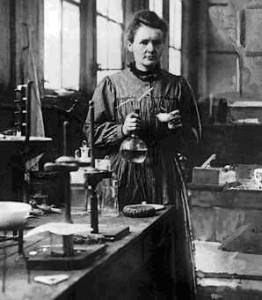
9 - Marie Curie- Radioactive substances

Ever wondered where the word ‘Polonium’ came from? Well, it came from a Polish physicist and chemist and Nobel Prize winner Marie Curie who named her newly discovered chemical after her native country. Ever wondered what happened to this discoverer of Polonium, Radium and Theory of Radioactivity? She died on July 4, 1934, from aplastic anemia, as a result of exposure to radiation after working continuously in a small enclosed shed without any safety measures because radiation’s danger were not well understood at that time.
10 - Donald Campbell - Speed engine for motorboat

Speed thrills but kills. We all know it yet we all ignore it. It’s human nature to challenge well known facts of life. British car and motorboat racer Donald Campbell was no different. He broke eight world speed records in the 1950s and 60s and to quench his insatiable drive to conquer speed he decided to try for another water speed record in 1966. This time the target was 300 mph. He invented a lighter and more powerful engine for his boat Bluebird K7. Blame it on adrenaline rush or sheer stupidity but instead of refueling and waiting for the wash of his first run to subside, as is usual with speedboat races, Campbell decided to make a return run immediately. The craft's stability began to falter as it travelled over the rough water and it somersaulted at a 45 degree angle plunging back into the lake and disintegrating at a speed of 320mph. Needless to say, the inventor was killed.