Tampilkan postingan dengan label Building. Tampilkan semua postingan

Senin, 24 Oktober 2011

10 of the Must-haves Construction Drilling and Cutting Tools

must have construction tools for drilling and cutting
Having your own tools for construction (Drilling and Cutting) is important since it may lessen the budget for a certain projects and will also help shorten the time frame of the construction project. Now, do you know what are the best construction tools in the market such as drilling concretes and masonry (boulders, granites, lime stones,bricks and other masonry stuff) as well furnishing and finishing gadgets?

In finding great tools means consulting a top of the line experts (professional in terms of handy matters) that are well experience like Gilatools.com. I created a 10 list construction tools and devices for Always10 that a handy man should have. These are the tools that you can't stop yourself from telling your friends and end up buying them for your work crews or co-workers - in short, tools for getting your building homes easier.

1 – Diamond Core Bits and Drilling Machine

A perfect circle is never created by chance or by luck, and this holds true most especially in the world of construction. While in the past, spear-point bits worked wonders in creating holes, these old-fashioned tools can no longer penetrate through new types of materials. Enter diamond core bits, a diamond tool used for drilling concrete, blocks, bricks, tiles, granite, marble, porcelain, stone, and other hard aggregate materials. A perfect circle or a perfect core can be seamlessly created through top-grade diamond core bits.

Core bits are designed with a high diamond concentration for superior cutting performance, enhanced productivity, and longevity. Because of its hollow center, core bits can easily bore a circle in any aggregate material to create a hole. The result is a hole the size of the drill and a smaller “core” coming from the center. The core holds the material in place, allowing the diamond core bit to cut a clean hole all throughout the material.


2 - Wet Concrete Core Bits

You may need a specially formulated professional quality segments that provide fast cutting and long life in a variety of materials including cured concrete and reinforced concrete. It should be full range of sizes for virtually any job. This type should be use on core drilling machines and hand-held drills.


3 - Dry Masonry Core Bits

These are counterpart of wet concrete core bits with laser-welded individual segments to hold up under extreme heat and cutting pressure. A barrel vents increase air flow to dissipate heat and cool the core bit and is specially formulated professional quality segments provide fast cutting and long life in a variety of materials including concrete, reinforced concrete, brick, block and masonry. This core bit is intended for drilling on a variety of soft brick and concrete block.

Caution: not recommended on concrete and reinforced concrete.


4 – Diamond Cup Wheel

Even when you think you have encountered the toughest compound around, there is always a tool available that can tame it. In the world of construction, individuals are faced with a countless number of materials and surfaces that seem almost impossible to penetrate. But remember, with the right tools, nothing is impossible. This is when a diamond cup wheel come in handy. Diamond cup wheels are diamond tools that are used for cutting, grinding, polishing, finishing, shaping, flattening and smoothing extremely hard surfaces and materials.

A diamond is one of the hardest and toughest types of material to crack. That being said, a diamond cup wheel is a grinding wheel bonded with industrial diamonds on its periphery. The main feature of these industrial-strength cup wheels is its turbo style arranged segments, best used for faster grinding. Additionally, diamond cup wheels also have big holes for efficient dust collection. Known for its strength and agility, a cup wheel is able to withstand the pressure it gets from its revolutions, providing remarkable results.


5 - Concrete Saws


According to wiki, a concrete saw (often known as a consaw or road saw) is a power tool used for cutting concrete, masonry, brick, asphalt, tile, and other solid materials. It can be a small hand-held cut-off saw, a big walk-behind saw or other styles, and it may be powered by gasoline, hydraulic or pneumatic pressure, or electric motors.

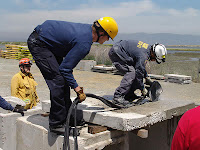
The saw blades (see also Wood Blade) used on concrete saws are often diamond saw blades to cut concrete, asphalt, stone, etc. Abrasive cut-off wheels can also be used on cut-off saws to cut stone and steel. The significant friction generated in cutting hard substances like concrete usually requires the blades to be cooled to prolong their life and reduce dust.


6 – Safety Goggles

Goggles or safety glasses are forms of protective eye wear that usually enclose or protect the area surrounding the eye in order to prevent particulates, water or chemicals from striking the eyes. They are used in chemistry laboratories and in woodworking.
Goggles are often worn when using power tools such as drills or chainsaws to prevent flying particles from damaging the eyes. Many types of goggles are available as prescription goggles for those with vision problems.


7 - Low Angle Block Plane

These angle block planes are arguably the single most useful hand tools in the woodworking shop. Handy for trim work, end grain planing, fine surfacing of difficult woods and much more. The compact size of these planes makes them perfect for one handed work where a full size tool would be bulky and awkward. Accurately machined from fine cast iron with brass adjusting knobs.


8 - Retractable flexible rule or tape measure

Rulers have long been made of wood in a wide range of sizes. They are not however all wood. Plastics have been used since they were invented; they can be molded with length markings instead of being scribed. Metal is used for more durable rulers for use in the workshop; sometimes a metal edge is embedded into a wooden desk ruler to preserve the edge when used for straight-line cutting.


9 – A complete Wet Stone or Masonry Saw Set

This wet stone cutter is powerful to cut through hard materials like engineered stones and has built-in water feed system that eliminates the harmful dust particles which are common in dry cutting applications. It also has a Ground Fault Circuit Interrupter safety feature which GFCI goes off when water enters inside the tool's housing preventing the operator from receiving electric shocks and sides handle for more stability and control.

It is able to provide perfect straight cuts which is required for quality fabrication and installation which can be use a contour/concave blades which for curve cutting operations.


10 - Stone Core Bits

This tool is specially designed supreme quality segments provide smooth and clean cutting in granite, marble, stone, tile, porcelain and similar materials and is used for wet drilling only. Of course, this tools is applicable on core drilling machines and hand-held drills for granite, marble, porcelain, artificial and natural stone.


  • Reference/Source: Images used in this post courtesy of Gilatools.com and Wikipedia.org
  • About Adrix Merkado, the author

    I'm Adrix or call me Drix from Manila, Philippines. I work for a Construction Firm's Service Quality Control Dept. Somewhere in Makati City. I am also a blogger (Newbie) and my blog Core Bit Drills is all about construction tips and tricks.

Kamis, 16 Juni 2011

10 of World's Most Fascinating Castles and Palaces

Castles represent the architectural glory of a country and the magnificently built castles of European countries not only portray the distinguished civilization of the country but also show the intricate work of art.
The beautiful castles in the European countries reveal the technology and methods on how these beautiful castles are built. This also demonstrates that how people of European countries have evolved alongside whereas building the castles.
These castles are of the prime interest for the tourist coming all over the world just to visit these glorious forts. You would also want to have a look at these castles. So, here you go! Feel free to share your opinion about this post.

1 - The Potala Palace: Tibet's greatest monumental structure

Perched upon Marpo Ri hill, 130 meters above the Lhasa valley, the Potala Palace rises a further 170 meters and is the greatest monumental structure in all of Tibet. In 637 Emperor Songtsen Gampo decided to build this palace on a hill, and the structure stood until the seventeenth century, when it was incorporated into the foundations of the greater buildings still standing today. Construction of the present palace began in 1645 during the reign of the fifth Dalai Lama and by 1648 the Potrang Karpo, or White Palace, was completed. The Potrang Marpo, or Red Palace, was added between 1690 and 1694; its construction required the labors of more than 7000 workers and 1500 artists and craftsman. The Potala Palace was only slightly damaged during the Tibetan uprising against the invading Chinese in 1959. Unlike most other Tibetan religious structures, it was not sacked by the Red Guards during the 1960s and 1970s. As a result, all the chapels and their artifacts are very well preserved.


2 - Mont Saint-Michel: a Medieval Castle on a Small Island

Mont St Michel France is situated on a quasi-island on the Normandy coast, near Brittany, which at high tide is almost entirely separated from the mainland. Only a narrow causeway, constructed in the 1880s preserves a link to the coast. Beware: the tide comes in quickly - many tourists have drowned attempting to cross the sandy bay. Unlike other castles in France, which began as defensive structures or pleasure palaces, Mont St Michel had its beginnings as a monastery. Today, the Castle attracts over four million visitors a year, far more than most castles in France and has been featured in numerous movies, cartoons, and even videogames.


3 - Predjamski Castle: Integrated in a Cave

Every castle in the world is unique in some way, no two are the same, but this one --even though it's rather small and humble compared to some-- is probably the only one in the world who is integrated in a cave, precisely the second largest cave system in Slovenia. Its name, Predjamski Grad, literally means "Castle in Front of the Cave."

The castle wasn't built in one go; first written records exist from 13th century, though the first part (left wing) was probably built in the first half of 12th century. Middle part was added in renaissance, and the right wing was build around 1570. Some things were added and changed later, but since 1990 renovation work is in progress, restoring it to the original 16th century look.


4 - Neuschwanstein Castle: the Classic Fairytale's Castle

The most famous of three royal palaces built for Louis II of Bavaria, sometimes referred to as Mad King Ludwig, the Neuschwanstein it’s a royal palace in the Bavarian Alps of Germany. egun in 1869 and left unfinished at Louis's death in 1886, the castle is the embodiment of 19th century romanticism. In a fantastical imitation of a medieval castle, Neuschwanstein is set with towers and spires and is spectacularly sited on a high point over the Pullat River gorge.

The construction of the castle was carried out according to a well thought-out plan. The castle was equipped with all kinds of technical conveniences which were very modern, if not to say revolutionary at that time. Running water on all floors. There were toilets equipped with automatic flushing on every floor. A warm air heating system for the entire building. American tourists are already familiar with Neuschwanstein; the sleeping beauty Castle in DisneyLand, was modeled on it.


5 - Matsumoto Castle: Japan's most fascinating castle

Matsumoto Castle, locally known as Matsumotojo, is one of the most complete and beautiful among Japan's original castles. It is also a good example of a so called "hirajiro", a castle built on the plain rather than on a hill or mountain. Matsumotojo's castle tower and smaller, second turret were built from 1592 to 1614 and were both well defended, as peace was not yet fully secured at the time. In 1635, when no more military threats existed, a third, barely defended turret for moon viewing was added to the castle.


6 - Hunyad Castle: were Dracula was held prisoner

Now located in Hunedoara, Romania, the Hunyad Castle was part of Principality of Transylvania, and it’s believed to be the place where Vlad III of Wallachia (commonly known as Dracula) was held prisoner for 7 years after he was deposed in 1462. The castle is a relic of the Hunyadi dynasty. It was built in Gothic style, but has Baroque and Renaissance architectural elements. It is a large and imposing building with tall and diversely colored roofs, towers and myriad windows and balconies adorned with stone carvings.


7 - Malbork Castle: World's Largest Brick Gothic Castle

The Castle in Malbork was built in Prussia by the Teutonic Order as an Ordensburg. The Order named it Marienburg, literally "Mary's Castle". The town which grew around it was also named Marienburg, but since 1945 it is again, after 173 years, part of Poland and known as Malbork. The castle is a classic example of a medieval fortress, and is the world’s largest brick gothic castle. UNESCO listed the castle and its museum as World Heritage Sites in December 1997.


8 - Palacio da Pena: Oldest Palace inspired by European Romanticism

The oldest palace inspired by European Romanticism, the Pena National Palace in Portugal stands on the top of a hill above the town of Sintra, and on a clear day it can be easily seen from Lisbon. First built in the 15th century as a palace, it was later reconstructed and donated to the church as a monastery. An earthquake in 1755 ruined most of it, until Prince Fernando acquired it in 1838 rebuilt it. The style of the palace is an eclectic combination of the original and subsequent styles, plus Romantic, Bavarian, and Moorish architecture, plus an English garden.


9 - Löwenburg Castle: The Disneyland of the 18th century

Within the Wilhelmshöhe Hill Park which sits on one end of the city of Kassel, there stands what appears to be a medieval castle. However, the Löwenburg or "Lion's Castle" was ordered to be built by the Landgrave Wilhelm IX from Hessen Kassel (1743 -1821), the Walt Disney of his era, over a period of eight years between 1793 and 1801 as a romantic ruin. It was carefully designed by his royal court building inspector Heinrich Christoph Jussow who had gone to England specifically to study romantic English ruins and draw up a plan for the Landgrave's garden folly. Today scholars regard Löwenburg Castle ruins as one of the most significant buildings of its genre, in addition to being one of the first major neo-Gothic buildings in Germany.


10 - Prague Castle: World's Largest Ancient Castle

One of the biggest castles in the world, and according to Guinness Book of Records, the biggest ancient castle, Prague Castle is about 570 meters in length and an average of 130 meters wide. The Czech Crown Jewels are kept here, and it was the place where the Czech kings, Holy Roman Emperors and presidents of Czechoslovakia and the Czech Republic have had their offices.
  • Reference/Source: Oddee.com by Gracie Murano[5/7/2009]

Jumat, 27 Mei 2011

10 of Movie's 20 Houses You Can Move In

A filming location is a place where some or all of a film or television series is produced, in addition to or instead of using sets constructed on a movie studio backlot or soundstage. For example, the television series 24 is filmed primarily on location except for some scenes which are always filmed on the same sets. On location is a term used to describe the filming on such a real site. The term is often mistakenly believed to mean that the production is being filmed on the actual location in which its story is set, but this is not necessarily the case.

There are many houses used as filming location, but totalfilm.com cut it down to 20 list to whom we can live in. Here's your top 10 of 20 movie houses you can move in.

1 - Blade Runner (1982)

The House: Designed by guru Frank Lloyd Wright, the 1924 Ennis House is nestled in the Hollywood Hills and sold for $15m in 2009.

The Movie: Ridley Scott’s moody masterpiece, set in a futuristic 2019 where ex-police officer Rick Deckard (Harrison Ford) is on the hunt for human look-alike Replicants.

If We Lived There: We’d paint each one of those squares a different colour and turn it into a 24/7 disco.
2 - Atonement (2007)

The House: A beautiful English manor called Stokesay Court. Built in 1889, it’s out in Shropshire somewhere.

The Movie: Haunting war drama in which a lie spirals out of control, and leads to James McAvoy heading out to war, never to see the love of his life ever again.

If We Lived There: We’d walk around in our finest frock all day long, draped in jewellery, and eat nothing but caviar.

3 - North By Northwest (1959)

The House: The Vandamm House. Not to be confused with the house of Jean-Claude Van Damme. Sadly it doesn’t actually exist, but you could build a copy - we're sure there's a blueprint lying around Hollywood somewhere.

The Movie: Celebrated as one of Alfred Hitchcock’s finest, Cary Grant stars as an innocent man mistaken for someone who wants to release government secrets to the world. It ends with that famous Mount Rushmore stand-off.

If We Lived There: It would either cure us of our debilitating fear of heights, or drive is crazy.

4 - Meet The Fockers (2004)

The House: Situated in the East of Los Angeles, this rather unique abode is normally white, and is known as the Baldwin Cottage (after founder Elias Baldwin).

The Movie: Comedy sequel, in which poor Focker Gaylord (Ben Stiller) has to introduce his family to his fiancée’s rabble – with belly-rolling results.

If We Lived There: We’d pretend we were Willy Wonka – doesn’t that look like the kind of place he’d live if evicted from the chocolate.

5 - What Lies Beneath (2000)

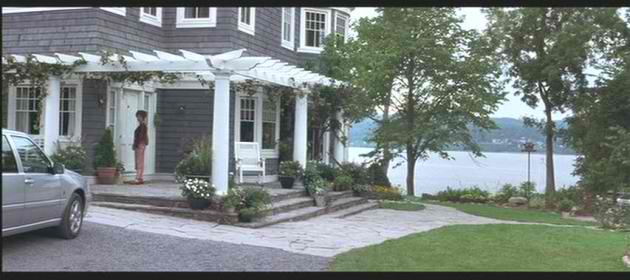
The House: A gorgeous lakeside residence in Addison, Vermont. Director Robert Zemeckis and his crew built the entire thing just for the movie.

The Movie: Creepy ghost story in which Michelle Pfeiffer is haunted by a spook when she moves into her new home. Meanwhile, has her scary neighbour really murdered his wife?

If We Lived There: We’d get an exorcist in pronto – you can never be too careful.


6 - Zombieland (2009)

The House: Sitting in Atlanta, Georgia, this abode doubles as Bill Murray’s crib in Zombieland. In reality, it belongs to ‘Big Poppa’, who was apparently formerly married to Kim Zolciak from The Real Housewives Of Atlanta.

The Movie: Hilariously tongue-in-cheek zombie flick that follows a quartet of survivors in a post-apocalyptic world that’s fallen at the feet of ravenous flesh-munchers.

If We Lived There: We’d probably get lost for days and end up crying in a corner until the maid rescues us.


7 - Gone With The Wind (1939)

The House: Twelve Oaks, a once stunning town house.

The Movie: Sweeping epic based on Margaret Mitchell’s novel, set against the backdrop of the American civil war.

If We Lived There: We’d need to spend a good decade or so returning it to its former glory (it burned down in the 1950s), but we reckon we can get a ruin for a heck of a discount.


8 - Twilight (2008)

The House: Super-cool, super-stylish digs owned by the Cullen family of vampires. In real life, it’s owned by Nike footwear designer John Hoke.

The Movie: Faint-inducing adaptation of Stephenie Meyers’ first Twilight novel, starring dreamboat Robert Pattinson as a twinkly good vampire who doesn’t eat people – unless they really deserve it. Which is why he refuses to – uh – eat Bella, who bites her lip a lot in response.

If We Lived There: We’d hire a CSI team to find all of R-Pattz fingerprints throughout the house, then frame them. We're odd like that.


9 - Disturbia (2007)

The House: Beautiful timber-frame American home situated in Whittier, California. Nice garden, too.

The Movie: Canny teen update of Rear Window, in which Shia LaBeouf’s ASBO nuisance is under house arrest when he spots his neighbour behaving weirdly. Is he a closet murderer?

If We Lived There: We’d sit on the porch every evening playing the banjo and drinking Duff.
10 - Ferris Bueller’s Day Off (1986)

The House: Located in Long Beach, California, this is the house owned by the Bueller family in the movie. It was also used in Red Dragon and Not Another Teen Movie.

The Movie: John Hughes classic following the titular Ferris’ fun-filled day skiving school. Charlie Sheen makes a brief, early cameo appearance.

If We Lived There: We’d invite Matthew Broderick over for dinner.


Senin, 16 Mei 2011

10 of World's Strangest and Weirdest Buildings/Infrastructures

Who can say that building infrastructures is not art at all? What do you think of these 10 list weird buildings in the world?
1 - Stone House (Guimarães, Portugal)


2 - Cathedral of Brasilia (Brazil)

The Cathedral of Brasília (Catedral Metropolitana Nossa Senhora Aparecida) is the Roman Catholic cathedral serving Brasília, Brazil, and serves as the seat of the Archdiocese of Brasília. It was designed by Oscar Niemeyer, and was completed and dedicated on May 31, 1970. The cathedral is a hyperboloid structure constructed from 16 concrete columns, weighing 90 tons each.
The exterior of the cathedral resembles the circular plan and ribbed structure of Liverpool Metropolitan Cathedral, but the latter is clad in solid material, while the Cathedral of Brasília allows light in and out for almost the full height of the ribs.


3 - Museum of Contemporary Art (Niteroi, Rio de Janeiro, Brazil)

The Niterói Contemporary Art Museum (Museu de Arte Contemporânea de Niterói — MAC) is situated in the city of Niterói, Rio de Janeiro, Brazil, and is one of the city’s main landmarks. It was completed in 1996.
Designed by Oscar Niemeyer with the assistance of structural engineer Bruno Contarini, who had worked with Niemeyer on earlier projects, the MAC-Niterói is 16 meters high; its cupola has a diameter of 50 metres with three floors. The museum projects itself over Boa Viagem (“Bon Voyage,” “Good Journey”), the 817-square metre reflecting pool that surrounds the cylindrical base “like a flower,” in the words of Niemeyer.
A wide access slope leads to a Hall of Expositions, which has a capacity for sixty people. Two doors lead to the viewing gallery, through which can be seen the Guanabara Bay, Rio de Janeiro, and Sugarloaf Mountain. The saucer-shaped modernist structure, which has been likened to a UFO, is set on a cliffside, at the bottom of which is a beach. In the film Oscar Niemeyer, an architect committed to his century, Niemeyer is seen flying over Rio de Janeiro in a UFO which then lands on the site, suggesting this to be the origin of the museum.


4 - The Crooked House (Sopot, Poland)

The Krzywy Domek is an irregularly-shaped building in Sopot, Poland. Its name translates in to English as the Crooked House.
The Krzywy Domek was built in 2004. It is approximately 4,000 square meters in size and is part of the Rezydent shopping center.
It was designed by Szotyńscy & Zaleski who were inspired by the fairytale illustrations and drawings of Jan Marcin Szancer and Per Dahlberg. It can be entered from either Monte Cassino or Morska Streets.


5 - Atomium (Brussels, Belgium)

The Atomium is a monument in Brussels, originally built for Expo '58, the 1958 Brussels World's Fair. Designed by André Waterkeyn, it stands 102-metres (335 ft) tall. It has nine steel spheres connected so that the whole forms the shape of a unit cell of an iron crystal magnified 165 billion times.
Tubes connect the spheres along the 12 edges of the cube and all eight vertices to the centre. They enclose escalators connecting the spheres containing exhibit halls and other public spaces. The top sphere provides a panoramic view of Brussels. Each sphere is 18 metres in diameter. Three spheres are currently (2008) closed to visitors, others can be reached easily by escalators. The vertical vertex contains a lift which was very fast and advanced at the time of building (the speed is 5 m/s).


6 - La Pedrera (Barcelona, Spain)


Casa Milà (Catalan pronunciation: [ˈkazə miˈɫa]), better known as La Pedrera (pronounced [ɫə pəˈðɾeɾə], meaning the 'The Quarry'), is a building designed by the Catalan architect Antoni Gaudí and built during the years 1905–1910, being considered officially completed in 1912. It is located at 92, Passeig de Gràcia (passeig is Catalan for promenade) in the Eixample district of Barcelona, Catalonia, Spain.


7 - Kansas City Library (Missouri, USA)

The Kansas City Public Library is a public system headquartered in the Central Library in Kansas City, Missouri.
The system operates its Central Branch and neighborhood branches located in Kansas City, Independence, and Sugar Creek. Founded in 1873, it is the oldest and third largest public library system in the metropolitan Kansas City area.
Its special collections, housed in the Central Library's Missouri Valley Room, has a collection of Kansas City local history, including original and published materials, news articles, post cards, photographs, maps, and city directories dating from the community's earliest history. The Library's Ramos Collection includes books, pamphlets, journal articles and other materials relating to African-American history and culture.
"The Community Bookshelf [Central Library Parking Garage] is a striking feature of Kansas City's downtown. It runs along the south wall of the Central Library's parking garage on 10th Street between Wyandotte Street and Baltimore Avenue. The book spines, which measure approximately 25 feet by 9 feet, are made of signboard mylar. The shelf showcases 22 titles reflecting a wide variety of reading interests as suggested by Kansas City readers and then selected by The Kansas City Public Library Board of Trustees."


8 - Nautilus House (Mexico City, Mexico)


9 - Habitat 67 (Montreal, Canada)

Habitat 67 is a housing complex and landmark located on the Marc-Drouin Quay on the Saint Lawrence River at 2600, Pierre Dupuy Avenue in Montreal, Quebec, Canada. Its design was created by architect Moshe Safdie based on his master's thesis at McGill University and built as part of Expo 67.


10 - Wonderworks (Pigeon Forge, TN, United States)


Kamis, 16 Desember 2010

Top 10 Most Expensive Houses in the World

Materialistic pleasures are so treasured in today’s world that very few people stop to think about other virtues in life. When it comes to living, some people live comfortably, others live extravagantly. Then there are these people who reside in the lap of luxury-literally!
1. Antilla
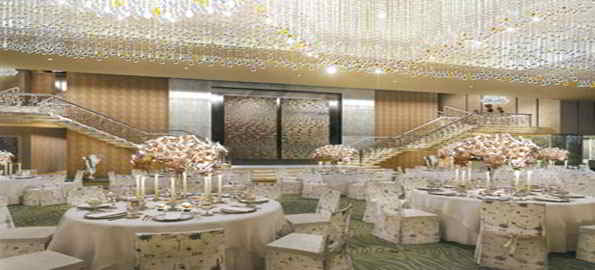
The most expensive house in the world is in India, owned by Mukesh Ambani. It is worth a whopping 1 billion dollars and has 27 floors. The house has a plush health club and a garage that can hold over 150 cars. Why? Just because this business tycoon has a personal collection of 168 cars. The house is made entirely of glass and is 570 feet tall.
2. William Randolph Hearst’s Mansion
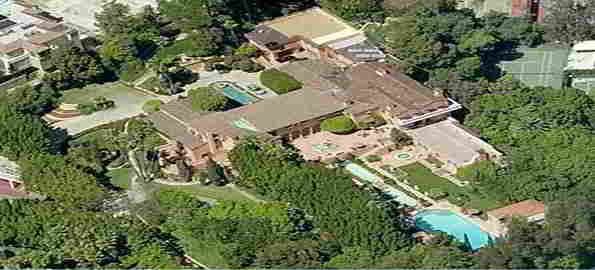
This house was initially owned by William Randolph Hearst and has three swimming pools, 29 bedrooms as well as a state of the art movie theater and discotheque. The mansion was put up for sale since 2007 and taken off a year later when nobody showed any interest in it.  It is worth 165 million dollars and stretches across 6 acres of land.
3. Elena Franchuk’s Victorian Villa
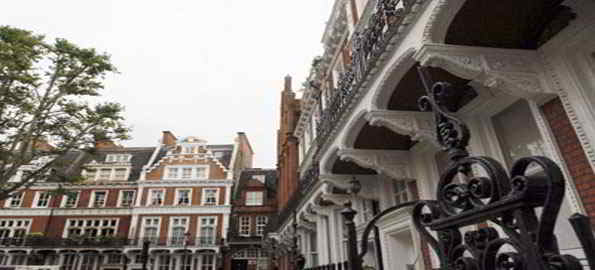
This house is located in the Kensington district in London was bought recently for about 161 million dollars. This 5-storey house has a 10 bedroom villa, an indoor swimming pool, a panic room, move theater and a sauna plus gym.
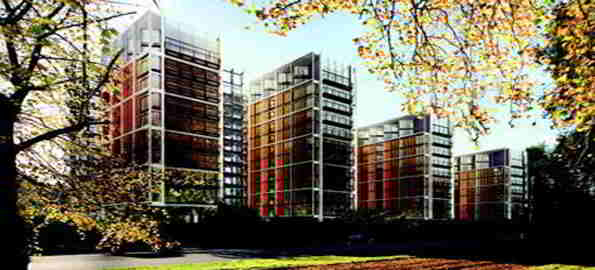
4. The Penthouses at One Hyde Park
This house was still under construction the last time we checked. When it is completed, it will be the second most expensive house in the world with a net worth of 160 million dollars. It will be nestled within a skyscraper in London called One Hyde Park.
5. Aaron Spelling’s Manor
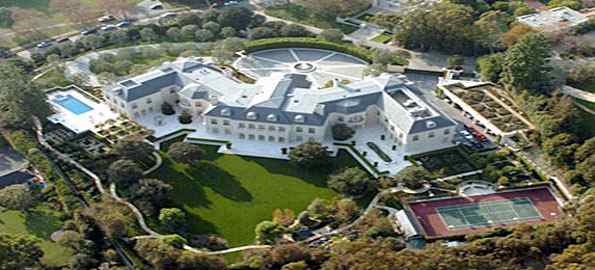
This mansion stands on land that stretches across 56,000 square feet of land. The net worth has been estimated at 150 million dollars and was built in 1991. It has 123 bedrooms, a tennis court, a skating rink, a bowling alley and several swimming pools.
6. Hala Ranch
Owned by Prince Bandar bin Sultan bin Abdulaziz of Saudi Arabia, this ranch will be found in Colo. It has 27 bathrooms and 15 bedrooms along with an indoor pool, private ski trails, sewage treatment plants, a tennis court, heated stables and a gas station. This 135 million dollar ranch stretches across 14,397 square feet.
7. Dracula’s Castle
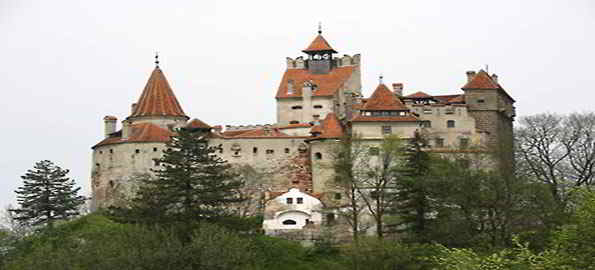
This castle was made into a museum during the 1980s and a few year back, Archduke Dominic who is the owner of the house put up the castle for sale for a net worth of 80 million dollars. However, this offer was not accepted and 2 years later, he put up the house for sale again. This time for a price that was not disclosed. Nobody has bought it yet. It has 57 rooms, 17 bedrooms and beautiful antique furniture.
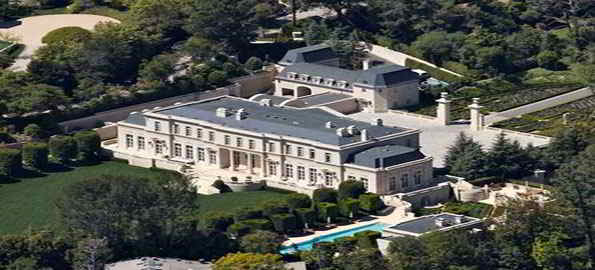
8. Fleur de Lys
worth over 125 million and built by Suzanne and David Saperstein, this house was put up for sale in 2007. The house has 15 bedrooms and the exterior is covered with French limestone while the interior is splashed with 24 karat gold. The house also has furniture items like Marie Antoinette’s curtain patterns and Napoleon’s favorite chair.
9. Maison de l’Amitie
Owned by Donald Trump, this house is in Palm Beach. It stretches across 80,000 square feet of land and holds a conservatory, a ballroom, 15 bedrooms, 8 half-baths, a tennis house and a luxurious guest cottage. The gigantic pool is only a minor part of this 125 million dollar mansion.
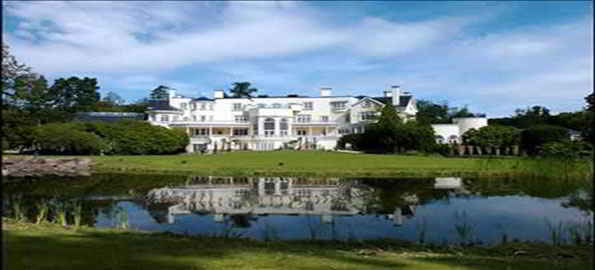
10. Updown Court
This house is located in England, just outside London and is reportedly larger than the Buckingham Palace. It has 103 rooms, a bowling alley, a large movie theater, over 3 swimming pools and a squash court. It is worth 116 million dollars and the best part is that the driveway is heated too!